
Balcony Leak Warning Signs You Shouldn’t Ignore
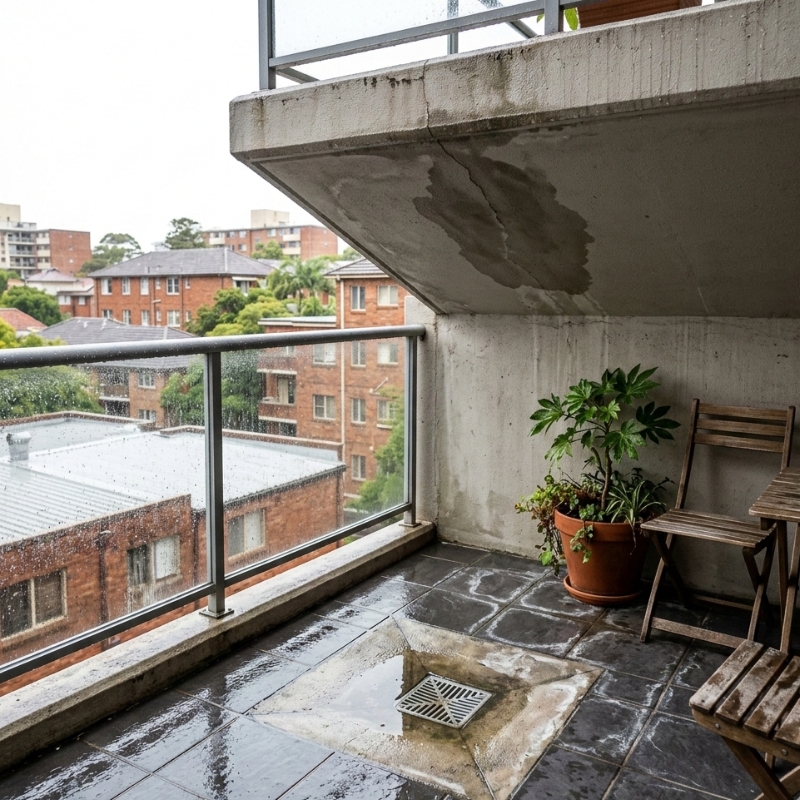
Balcony leaks rarely start as a dramatic drip. In Sydney, they’re more likely to show up as subtle clues after rain: a faint musty smell, a white powder on grout lines, or a small paint bubble on the ceiling below. That’s why leaking balcony repair is often more complex than it first appears. The trouble is, once water gets past the surface, it can travel under tiles or along edges before you see any obvious damage.
This guide covers the warning signs you shouldn’t ignore, what each sign often points to, and what you can safely check without ripping anything up. It’s written with Sydney conditions in mind: wind-driven rain, frequent wet-dry cycles, and (in many suburbs) coastal salt air that accelerates corrosion.
Why balcony leaks in Sydney are easy to miss
A balcony is exposed to weather all year, and it’s built from layers that can hide moisture:
• Surface layer (tiles, paint, sealants)
• Bedding/screed layer (often porous)
• Waterproofing membrane (the critical barrier)
• Drainage points (outlets, floor wastes, scuppers)
• Edges and junctions (door tracks, balustrade posts, wall upturns)
When water gets past the surface, it can travel sideways under tiles or along edges before it shows up somewhere else. That’s why the first visible sign is often not where the leak started.
10 balcony leak warning signs (and what they usually mean)
1) Water stains on the ceiling below
What it often means
• Water is getting under the surface and migrating to the slab edge or penetrations
What to check next
• Note where the stain sits relative to the balcony above (edge, doorway, corner)
• See if it worsens after rain events (photos + dates help)
2) Bubbling, peeling, or flaking paint underneath
What it often means
• Moisture is cycling through the substrate (repeated wetting/drying)
What to check next
• Does it expand after rain? Any softness nearby? Any rust-like streaks?
3) Efflorescence (white powdery salts) on tiles, grout, or concrete
What it often means
• Water is moving through cement-based materials and bringing salts to the surface
What to check next
• If it returns quickly after cleaning, it’s more concerning
• Look for concentration near edges, corners, and door lines
4) Grout cracks that keep reopening
What it often means
• Movement stress at a junction (door/wall zones are common) plus moisture entry
What to check next
• Is there a “band” of cracking near the door or wall?
• Does grout stay darker in that area long after rain?
5) Loose, hollow, or “drummy” tiles
What it often means
• Water has weakened adhesive/bedding, or the substrate is deteriorating
What to check next
• Gently tap: hollow sound clusters near drains/edges/doorways can be a clue
• Avoid heavy loads over suspect areas until you know what’s going on
6) Persistent damp patches that dry slowly
What it often means
• Moisture trapped below the surface and wicking upward
What to check next
• Compare drying time across the balcony on the same day
• Watch whether the patch grows with repeated rain
7) Ponding water after rain
What it often means
• Drainage is compromised: blocked outlet, incorrect falls, or settlement over time
What to check next
• Where does water collect and how long does it sit?
• Clear leaves/sediment from grates and observe again next rainfall
8) Musty smell, mould, or damp odour near the balcony door
What it often means
• Moisture is entering at/under the threshold or nearby wall junction
What to check next
• Does the smell intensify after rain?
• Look for subtle paint changes or swelling inside near the door
9) Swollen skirting boards or lifting floors near the balcony door
What it often means
• Water has crossed the threshold (often from ponding at the door line or failed detailing)
What to check next
• Outside: gaps in sealant, cracks at the door line, ponding against the track
• Inside: photograph swelling early (it can “shrink back” and hide evidence)
10) Rust stains, corrosion, spalling, or crumbling concrete
What it often means
• Longer-term water ingress with corrosion risk (worse in coastal Sydney)
What to check next
• Treat spalling or exposed steel as a safety issue
• Keep people clear of affected areas and document immediately
For general building safety framing, NSW guidance is a useful reference: Home building safety and standards (NSW Government)
A simple Sydney-friendly inspection checklist (no tools)
Use this after rain when it’s safe, because symptoms show up clearly.
Drainage and surface
• Is there ponding? Where does it collect?
• Does the drain/outlet clear quickly?
• Are grates blocked with leaves or grit?
• Is one area staying damp far longer than the rest?
Edges, corners, and junctions
• Any cracks where the balcony meets the wall?
• Any gaps or failing sealant along edges or door tracks?
• Any efflorescence concentrated in corners or perimeter lines?
Tiles and grout
• Are grout lines cracked or missing in a repeated pattern?
• Any hollow/loose tiles in the same zone?
• Are grout lines staying dark long after rain?
Below and inside
• Any ceiling stains or bubbling paint below?
• Any musty smell indoors after rain?
• Any swelling in skirting/floors near the balcony door?
If you’re ticking multiple boxes, it’s a strong sign the issue is more than cosmetic.
What not to do (quick fixes that often backfire)
These moves can trap moisture and make the real problem harder to diagnose:
• Painting over damp stains without identifying the moisture source
• Smearing silicone “everywhere” (especially over wet/dirty surfaces)
• Applying surface coatings that seal moisture beneath tiles
• Regrouting without addressing why grout is cracking (movement + moisture)
• Ignoring ponding and focusing only on small visible cracks
What you can do immediately to reduce damage
These steps are about limiting harm and gathering clear evidence.
Clear drainage and reduce water exposure
• Remove debris from drains/outlets and clear leaf litter
• Move pot plants away from corners/door lines where water pools
• After heavy rain, gently broom water toward the drain (if safe)
Dry and ventilate (without overdoing heat)
• Ventilate rooms near the balcony door
• Use a dehumidifier if indoor humidity spikes after rain
• Avoid blasting one spot with strong heat (it can worsen cracking/movement)
Document the pattern
• Take photos of stains, cracks, efflorescence, ponding, and loose tiles
• Record dates and whether it rained (and how heavily)
• Note if it’s worse with wind-driven rain (common in Sydney storms)
Good documentation is especially valuable in strata settings.
Interpreting where the sign appears
Location often helps narrow the likely entry points.
Issues near the door threshold
Often linked to:
• Ponding at the door line, poor falls, or failed threshold detailing
Issues along the perimeter edge
Often linked to:
• Edge/junction detailing problems or cracking along the wall/slab interface
Issues around balustrade posts/fixings
Often linked to:
• Penetrations through waterproofing and degraded sealing around fixings
If your observations point to genuine water ingress, it can help to understand your next steps and compare balcony leak repair options in a non-rushed way.
When to involve a qualified professional
You don’t need to panic at a single hairline crack. But you also don’t want to “wait and see” through another wet season if warning signs are stacking up.
Consider escalating if:
• Staining/bubbling below is active or recurring
• Efflorescence returns in the same zones repeatedly
• Tiles are loose/hollow or the surface feels unstable
• Rust staining, spalling, or widening cracks appear
• The problem correlates strongly with rain and is worsening
A focused balcony leak inspection can help confirm whether it’s surface-level wear or something deeper in the waterproofing and junction detailing.
FAQ
Can a balcony leak travel sideways?
Yes. Water can migrate under tiles or along edges and show up away from the original entry point.
If it only leaks in heavy rain, is it less serious?
Not necessarily. Wind-driven rain can force water into weak points that won’t show in light showers, and repeated storms can still saturate layers over time.
Is efflorescence always a waterproofing failure?
Not always, but recurring, localised efflorescence that lines up with rain is a strong warning sign—especially if there’s staining below or persistent damp patches.
What’s the first thing I should do if I see staining below?
Document it immediately (photos + dates), clear drainage on the balcony, and track whether it repeats after rain.
If you’re seeing multiple warning signs, getting help with a leaking balcony early can prevent damage spreading into ceilings, internal walls, and slab edges.