
Water Leaking Through Bathroom Walls: The Most Common Causes in Sydney Homes
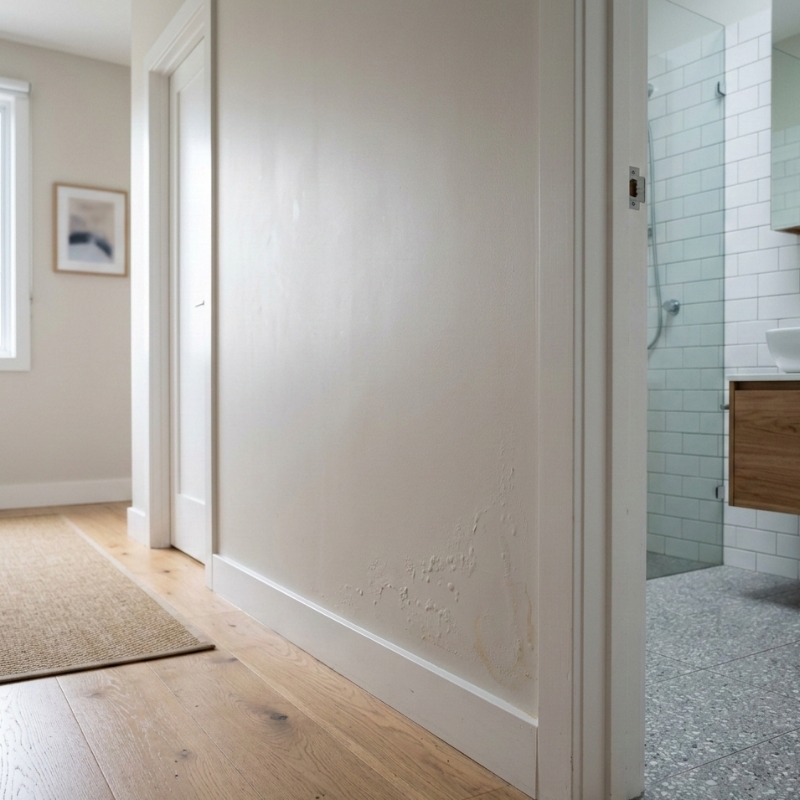
A damp patch on the hallway wall. Paint bubbling near a skirting board. A musty smell that keeps creeping back no matter how hard you clean. When water starts showing up outside the bathroom, it’s easy to write it off as “a bit of steam” or “Sydney humidity” — but often, it’s a sign your bathroom waterproofing isn’t doing its job.
Sometimes it is ventilation. Often, it isn’t.
Water leaking through bathroom walls is one of those problems that tends to start small and stay hidden. By the time it’s visible, moisture has usually been travelling for a while—through grout lines, behind tiles, along a junction, or into the wall cavity from a plumbing fitting. The sooner you narrow the likely cause, the easier it is to limit damage and avoid repeated “patch fixes” that don’t address what’s actually happening behind the surface.
This guide breaks down the most common causes seen in Sydney homes and apartments, what clues to look for, and the safe checks you can do before anyone starts pulling tiles off.
What “water leaking through a bathroom wall” really means
A bathroom wall can look wet on the outside (hallway, bedroom, living area) for a few different reasons. Most cases fall into one of these buckets:
• A plumbing leak inside the wall (pressurised hot/cold lines, fittings, mixer connections)
• Water getting past finishes (cracked grout, failed silicone, gaps around penetrations, shower screen seals) and finding a pathway
• Wet-area system failure (waterproofing membrane, substrate, junction detailing, drains and puddle flanges, corners)
The tricky part is the symptom can look identical across all three. That’s why you’ll get the best results by matching the pattern of the moisture (where it appears and when it worsens) to the most likely causes.
Quick answer
If the dampness appears even when the shower hasn’t been used for a day or two, suspect plumbing. If it flares up after showers—especially near corners, the shower entry, or around tapware—suspect water getting past finishes or wet-area detailing. If it keeps coming back after “resealing” or “regrouting”, treat it as a system issue that needs proper investigation.
Why this is common in Sydney homes
Sydney has a few conditions that can make bathroom wall leaks more likely (or more noticeable):
• Humid summers can make mould and musty odours show up faster when there’s hidden moisture
• Many homes have had at least one renovation, and wet-area shortcuts often reveal themselves later
• Apartments are common, and shared walls/ceilings can spread moisture between lots
• Older homes can have movement that stresses corners and junctions over time
None of that means every damp mark is a disaster. It does mean it’s worth investigating early, while the evidence is clearer and damage is still limited.
The most common causes of bathroom wall leaks in Sydney homes
1) Leaks around tap penetrations and mixers
Every hole cut through a tiled wall for a mixer, spout, or shower rose is a potential weak point. If sealing around penetrations wasn’t done well (or has degraded), water can track behind tiles and into the wall cavity. Sometimes it’s not even the wet-area layer at fault—sometimes a plumbing connection behind the wall is slowly weeping.
What you’ll often notice:
• Dampness or mould concentrated around one side of the shower (where the mixer sits)
• Discolouration outside the bathroom at about waist-to-chest height
• Moisture that gets worse after showers, even if the floor outside the shower stays dry
2) Shower screen seals and water escaping outside the “wet zone”
Frameless and semi-frameless screens depend on seals and alignment. A worn bottom seal, a gap at the hinge, or a misaligned door can send a surprisingly consistent amount of water onto the bathroom floor—especially with hand showers, kids, or strong water pressure.
Over time, that water can:
• Sit at the wall-to-floor junction
• Track along edges behind skirting or under flooring
• Find its way through a junction into the wall cavity
Typical clues:
• Water droplets on the bathroom floor just outside the screen after showering
• Swollen skirting or soft flooring at the shower entry
• Damage appearing low down on the other side of the wall
3) Corner and junction failures (wall-to-wall and wall-to-floor)
Corners move. Even a tiny bit of building movement can open hairline gaps that let water in. If the corner detailing behind tiles is weak—or if there’s repeated movement—water can travel down into the substrate and migrate.
Clues:
• Cracks that follow corners or the floor line
• Gaps in silicone at internal corners
• Moisture showing up outside the bathroom near a corner (not mid-wall)
4) Drain and puddle flange issues
Many “mystery” bathroom wall leaks trace back to drainage detailing. If the connection between the wet-area waterproofing system and the floor waste isn’t properly integrated, water can bypass the intended pathway and soak into the substrate instead of going down the drain.
Clues:
• Dampness is worse after longer showers (more water volume)
• Musty odour strongest near the floor waste area
• Damage appears low down, or spreads along the floor line
5) Cracked grout, loose tiles, and failed silicone (the surface vs the system)
Tiles and grout aren’t waterproof on their own. They’re a wear surface. Water can pass through grout, especially if it’s cracked, porous, or has movement. Silicone is also a wear item and can shrink, detach, or split over time.
However, if water is reaching the wall cavity, there’s often more going on than “just grout”:
• Poor detailing at corners/penetrations
• Compromised membrane coverage
• Moisture moving into a weakened substrate
Clues:
• Grout cracks that keep returning soon after repair
• Hollow-sounding tiles (possible debonding or moisture issues)
• White powdery deposits (efflorescence) along grout lines
6) Plumbing leaks inside the wall cavity
A slow plumbing leak can mimic wet-area failure and vice versa. The key difference is timing: plumbing leaks can show up when no one has showered. They can also worsen with tap use anywhere along that line.
Clues:
• Dampness persists even when the shower isn’t used for 48 hours
• Moisture appears in a consistent spot regardless of shower direction/splash
• Water use patterns (like running a basin) correlate with dampness changes
7) Renovation shortcuts that only show up later
Sydney has plenty of renovated stock, and not all wet areas are built equally. Some common renovation issues that increase leak risk include:
• Waterproofing applied too thinly or inconsistently
• Weak detailing at penetrations, corners, and thresholds
• Falls that cause pooling near the wall line
• Tiling over compromised wall sheeting or substrate
• Drain integration that doesn’t properly tie into the waterproofing system
If your bathroom was renovated within the last few years and you’re seeing repeating symptoms, it’s a sign the wet area might have a systemic weak point rather than a one-off surface issue.
8) Condensation and ventilation problems that look like leaks
Not every damp wall is from liquid water travelling behind tiles. Condensation can cause mould and peeling paint, especially in winter or in homes with poor ventilation. The difference is condensation is often broader and more uniform, while leaks tend to have a “pathway” pattern.
Clues that point more toward condensation:
• Mould appears on ceilings and upper walls, not just near the shower line
• Mirrors and windows stay fogged for a long time after use
• The issue improves noticeably with better fan use and airflow
Symptom-to-cause mapping: what your wall is telling you
Bubbling paint or peeling outside the bathroom
Most likely causes:
• Water tracking through a junction or penetration
• A plumbing leak in the wall cavity
What to check:
• Does it worsen right after showers, or is it steady all day?
Damage low down (swollen skirting, soft flooring, stains near floor level)
Most likely causes:
• Shower screen water escaping
• Drain/floor junction issues
• Wall-to-floor junction failure
What to check:
• Is there visible water outside the shower after use?
Musty smell that keeps returning
Most likely causes:
• Ongoing moisture trapped behind finishes or in the wall cavity
• Repeated small wetting events (even if you don’t notice surface water)
What to check:
• Does the smell spike after showers and linger?
White powdery salts in grout lines (efflorescence)
Most likely causes:
• Moisture moving through cement-based materials and carrying salts
What to check:
• Look closely at corners, penetrations, and around the drain for repeat dampness patterns.
Safe checks you can do before you pull anything apart
These won’t replace professional diagnosis when needed, but they’re useful for narrowing the likely category of problem.
1) The timing test (48-hour pattern check)
Try this if practical:
• Avoid using the shower for 48 hours (use another bathroom if you can)
• Observe whether the damp patch reduces, stays the same, or worsens
If it reduces noticeably, it’s more likely linked to shower use. If it stays the same, plumbing becomes more likely.
2) The “dry paper towel” check for screen escape
After a normal shower:
• Run a dry paper towel along the bathroom floor just outside the shower screen
• Press it lightly into the floor line near the shower entry and corners
If it comes away wet, you may be dealing with water escaping the shower zone rather than a hidden pathway behind the wall.
3) The basic water meter check (plumbing clue)
If you can safely access your water meter:
• Turn off all taps and ensure no appliances are drawing water
• Watch the meter (or leak indicator if fitted)
Movement can suggest a leak somewhere on the line. It’s not definitive, but it’s a helpful clue to guide next steps.
4) The “where does it show first?” check
Water often becomes visible where it can escape, not where it enters. When the wall looks damp outside the bathroom, look for:
• Junctions and corners inside the bathroom on the opposite side
• Penetrations (mixer, spout, shower rose)
• The base of the wall near the shower entry and drain line
Q&A: Can water really leak through tiles and grout?
Yes. Tiles and grout are not the waterproof layer—they’re the finish. Grout is porous to varying degrees and can crack with movement. Water can pass through, especially in high-use showers, and then it relies on the wet-area waterproofing system behind the tiles to manage that moisture.
If the wet-area system is compromised, water can reach the wall cavity and show up on the other side of the wall. If you want to compare your situation to the most common early warning signs, here are the most typical signs your shower waterproofing is failing so you can narrow the likely cause faster.
A useful rule of thumb: if you’ve “resealed” more than once and the same symptoms return, stop treating it as cosmetic and start treating it as a pathway problem.
Apartments and strata: what to do in Sydney before it becomes a dispute
In Sydney apartments, moisture can travel into neighbouring lots and common property. That means a bathroom wall leak is not just a maintenance problem—it’s also a documentation and communication problem.
Practical steps:
• Photograph the damage regularly (same angle, similar lighting)
• Record dates and what was used (shower only, basin, laundry nearby)
• Notify strata early, especially if the wall backs onto common areas or another lot
• Avoid major demolition until responsibilities are clear, unless there’s an immediate safety risk
If water is affecting a ceiling below, that’s a priority for containment and notification—ceilings can fail once plaster becomes saturated.
When it’s urgent and you shouldn’t “monitor it”
Treat it as urgent if you notice:
• Water near power points, switches, or electrical fittings
• Bulging, sagging, or soft ceiling below the bathroom
• Rapid spreading dampness, active dripping, or pooling where it shouldn’t pool
• Strong sewage odour (possible drain issue)
• Significant mould growth, particularly if anyone has asthma or respiratory sensitivities
In these situations, focus on safety and limiting further wetting rather than running repeated “tests”.
Why wet-area requirements matter (without going full code-nerd)
Wet areas in Australia have building requirements designed to prevent exactly the kind of hidden moisture damage you’re seeing. You don’t need to memorise them, but it helps to understand why certain places fail so often: penetrations, junctions, and drains need careful detailing because they’re natural shortcut points for water.
For a plain-language reference point, the NCC’s section on wet area waterproofing is a useful overview: National Construction Code – wet area waterproofing.
Prevention mindset: keeping small problems small
A lot of expensive damage starts with small, repeated wetting events—just enough water, often enough times, to saturate the wrong materials.
Helpful habits that reduce risk:
• Keep an eye on silicone at corners, penetrations, and the shower base edge
• Wipe up consistent pooling (pooling often points to falls/drain issues)
• Run the exhaust fan long enough to clear steam and moisture (not just during the shower)
• Deal with recurring mould early, especially if it’s always in the same spot
If you’re aiming to prevent repeat issues, these practical bathroom waterproofing maintenance tips are a solid place to start, especially for high-use family bathrooms.
What to do if your checks point to a deeper wet-area issue
If your observations keep pointing to a systemic issue (not just a one-off surface gap), your best next steps are about evidence, containment, and clarity.
• Contain: minimise splashing, keep the area dry between uses, avoid long showers if symptoms spike
• Observe: note exactly when the issue worsens and which fixtures were used
• Document: photos, dates, and a brief timeline
• Avoid random patching: repeated “spot fixes” can hide the pathway and delay the real solution
And if you want a clearer understanding of what “good” looks like in a wet area—so you can ask the right questions and spot common failure points—this guide offers help with Bathroom waterproofing in plain language.
FAQs
Why is the wall outside my shower wet?
Most commonly, water is either escaping the shower zone (screen seals, gaps at the entry) or travelling behind tiles through a weak point (corners, penetrations, drain detailing). Less commonly, it’s a plumbing leak inside the wall.
How do I tell if it’s plumbing or waterproofing?
Plumbing leaks often persist even when the shower isn’t used and may correlate with general water use. Waterproofing/finish pathway issues usually worsen after showering, particularly around corners, penetrations, and the shower entry. Timing patterns and a basic meter check can help narrow it down.
Can hairline grout cracks cause major damage?
Hairline cracks can be an entry point, but significant damage usually involves repeated wetting plus a pathway behind the finishes. If cracks reappear quickly after repair, it often indicates movement or an underlying system weak point.
Why does mould keep coming back in the same spot?
Because moisture is still present—either from a leak pathway, moisture trapped behind finishes, or ongoing condensation from poor ventilation. If it’s always in the same lower corner or near the shower entry, treat it as a moisture pathway problem first.
Is it normal for tiles and grout to let water through?
Some moisture transfer can occur, especially through grout. That’s why wet areas rely on a waterproofing system behind the tiles. When that system is compromised, moisture can reach the wall cavity and become visible outside the bathroom.