

How to Fix a Leaking Shower: Causes, Fixes & When to Call a Pro
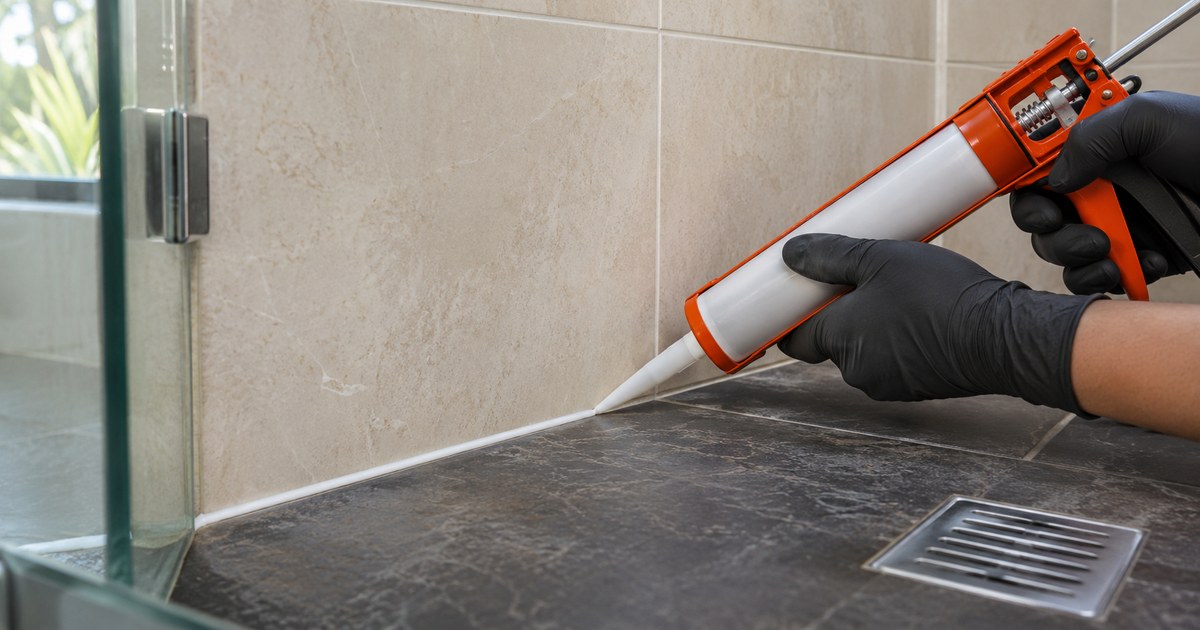
To fix a leaking shower, find where the water is escaping first, then repair that point: replace failed silicone, renew cracked grout, re-waterproof a failed membrane or repair a cracked base. Replacing silicone is a realistic DIY job. Grout is harder, and membrane, base and in-wall plumbing repairs need a licensed trade. Most leaks are fixed from the surface, without removing tiles.
- Find the leak before you fix anything. New silicone in the wrong place changes nothing.
- DIY: replacing silicone at the junctions and screen. Possible with care: regrouting.
- Not DIY: the membrane under the tiles, a cracked base, and any pipe or mixer inside the wall.
- If a proper reseal does not stop it, the fault is under the tiles.
Step 1 — find the cause
Start by working out which part of the shower is letting water out, because each cause has a different fix. Dry the recess completely and leave it overnight, then test one zone at a time and watch for the damp to return.
- Floor only. Run water on the floor for five minutes without wetting the walls. Damp below or beside the shower points to the floor grout, the floor-to-wall junction, the waste seal or the base.
- One wall at a time. Spray each wall separately. Damp in the room behind that wall points to the grout or the wall junctions.
- The screen. Wet the screen, its frame and the door strip. Water on the floor outside points to the screen seals.
- Taps off. If anything is still dripping or damp with no water running, the fault is plumbing, not waterproofing.
If the water is coming from the outlet itself, that is a different repair: see fixing a leaky shower head or a dripping shower faucet.
Step 2 — the DIY-able part
Replacing perished silicone is within reach of a careful owner, and it fixes a large share of leaks that show up as water outside the screen. You will need a sharp scraper or silicone remover, a utility knife, methylated spirits, clean cloths, masking tape, a caulking gun and a mould-resistant, sanitary-grade silicone.
- Cut out all of the old silicone. Every trace has to go. New silicone does not bond to old.
- Clean the joint. Remove residue, soap film and mould, then wipe down with methylated spirits.
- Let it dry. Leave the joint to dry out fully, at least overnight. Silicone applied over a damp joint traps water behind it.
- Mask and apply. Tape either side of the joint and run one continuous bead with no gaps or breaks at the corners.
- Tool the bead. Smooth it so it presses into both surfaces, then lift the tape before it skins.
- Let it cure. Keep the shower dry for the cure time on the tube, commonly 24 hours.
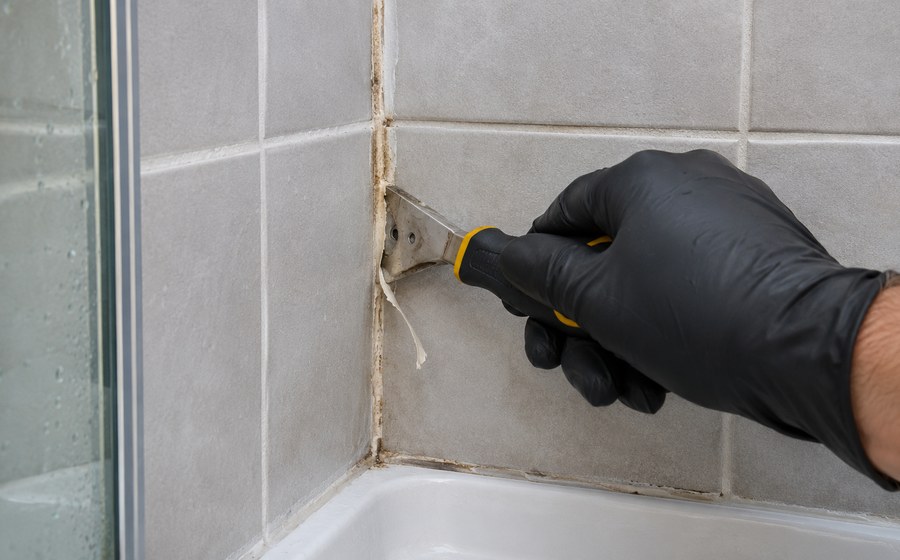
If the leak comes back after a careful reseal, the silicone was not the only problem. A professional shower resealing includes checking the grout and junctions the bead was hiding.
Quick fixes that fail, and why
- New silicone over old. It does not bond properly, soon peels, and hides the gap underneath while water keeps getting in.
- Clear brush-on sealers. They reduce how much water grout absorbs but cannot bridge a crack, a missing joint or a failed junction.
- Grout pens and paint. They colour the surface of the grout. A cracked joint underneath is still cracked.
- Waterproof tape. It lifts in a wet, soapy recess and traps moisture behind it.
- Waiting to see. The leak does not stabilise. Every shower moves more water into the wall or floor.
How to seal a leaking shower floor
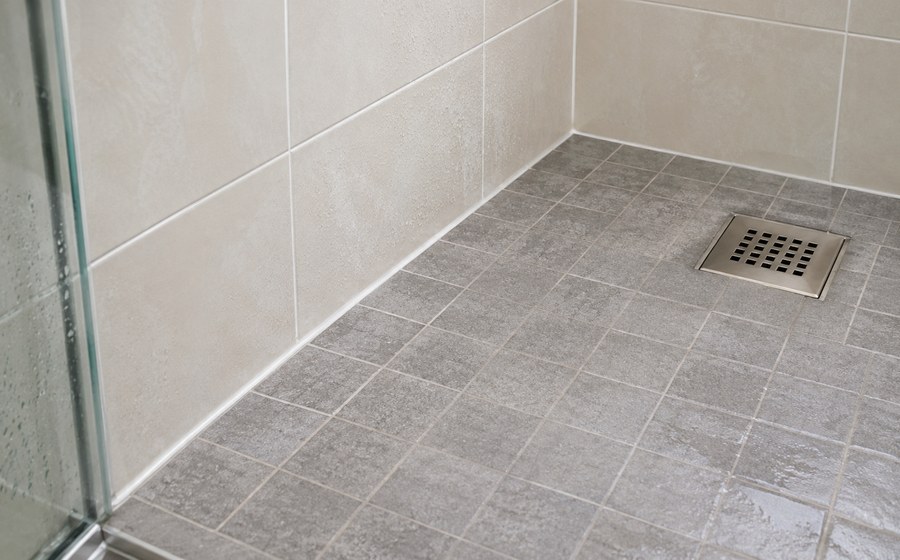
A leaking shower floor is sealed at three points: the grout between the floor tiles, the junction where the floor meets the walls, and the seal around the waste. Rake out and replace any cracked floor grout, then cut out and renew the silicone around the full perimeter and at the waste. If the floor tiles sound hollow, or water is showing on the ceiling below, the membrane under the floor has failed and sealing the surface will not hold.
Step 3 — when to call a pro
Call a specialist when the fault is under the tiles or inside the wall. That means loose or hollow tiles, damp in another room or on the ceiling below, a cracked base or hob, a leak that survives a proper reseal, or a wall that is wet with no surface fault. These need the leak path traced and the right repair chosen, so get your leaking shower fixed by a team that does this every day. If the membrane has gone, the repair is bathroom waterproofing to AS 3740, with a certificate at the end.
There are legal lines too. In NSW, anyone you pay to do waterproofing worth more than $5,000 in labour and materials must hold a contractor licence. All plumbing must be done by a licensed plumber, with one exception: an owner or occupier may repair a tap or showerhead in their own home.
DIY or licensed trade: which repair is which
| Repair | Who should do it | Why |
|---|---|---|
| Replace silicone at junctions and screen | Careful DIY, or a specialist | Surface work. Needs a dry joint and all old silicone removed. |
| Repair a dripping tap or shower head | Owner or occupier, or a plumber | NSW allows an owner or occupier to repair a tap or showerhead. |
| Regrout the shower | Experienced DIY, or a specialist | Joints must be raked out without chipping tiles. Epoxy grout is hard to work. |
| Re-waterproof the membrane | Licensed waterproofer | Must meet AS 3740. Paid work over $5,000 needs a contractor licence. |
| Repair a cracked base or hob | Specialist | The wrong filler fails, and the crack is usually a sign of movement. |
| Pipe or mixer body inside the wall | Licensed plumber | Plumbing other than tap or showerhead repair must be licensed in NSW. |
Licensing rules are from the NSW Government and apply in NSW. Check your own state if you are elsewhere.
Repair or rebuild: how long it takes and what it costs
A surface repair is quicker and far cheaper than rebuilding the shower, and it is the right answer whenever the structure under the tiles is still sound. The price depends on which repair is needed and how much of the wet area is affected, so it is quoted after an inspection. See what repairs cost for the factors.
| Surface repair | Full rebuild | |
|---|---|---|
| Cost | A fraction of a rebuild | Full bathroom renovation cost |
| Time | Hours to a day | Days to weeks |
| Tiles | Stay in place | Removed and replaced |
| Shower back in use | About 24 hours | After the rebuild |
| When it is right | Silicone, grout or membrane failure caught in time | Structural damage under the tiles |
How to stop a shower leaking again
- Check the silicone every few months and replace it as soon as it peels or grows mould under the bead.
- Fix cracked grout while it is a few joints, before water has been getting through for months.
- Keep harsh cleaners and stiff brushes off grout and silicone.
- Ventilate the bathroom so the recess dries between showers.
- After any repair, keep the certificate or paperwork. It matters for strata, insurance and resale.
Frequently asked questions
Can I fix a leaking shower myself?
You can replace failed silicone yourself, and a confident DIYer can regrout. Membrane, base and in-wall plumbing repairs are not DIY: a surface patch will not hold, and some of that work must be licensed.
Do you have to remove tiles to fix a leaking shower?
No, in most cases. Resealing, regrouting and re-waterproofing are done from the surface. Tiles are only removed when the structure underneath has been damaged.
How much does it cost to fix a leaking shower?
It depends on the repair: a reseal costs less than a regrout, and both cost far less than re-waterproofing or a rebuild. A fixed price is confirmed in writing after an inspection.
How long does a shower leak repair take?
Most reseal and regrout jobs take a few hours, and the shower is usually ready to use again about 24 hours later. Membrane work takes longer because of curing time.
Will new silicone alone stop a shower leak?
Only if failed silicone was the cause. If the grout is cracked or the membrane has failed, new silicone hides the symptom for a while and the leak returns.
How do I fix a shower that is leaking through the floor?
Renew the floor grout and the silicone at the floor-to-wall junction and around the waste. If water still reaches the room below, the membrane or base has failed and needs a specialist.
Do I need a plumber or a waterproofer for a leaking shower?
A waterproofer if the water escapes while the shower is running: that is silicone, grout, membrane or base. A plumber if it drips with the taps off or the wall is wet all the time.
Got a leaking shower?
Book an inspection and a fixed-price quote. We come to you, anywhere in Sydney.
Get my quote