

Black Mould in the Shower: What Causes It and How to Stop It
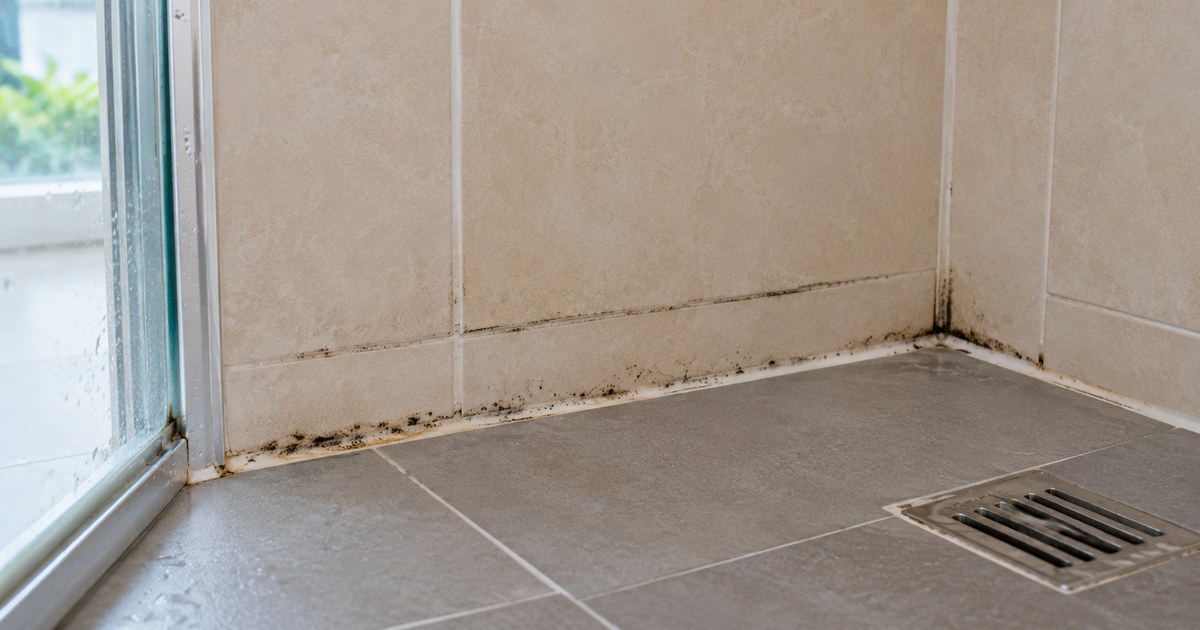
Black mould in the shower grows wherever moisture lingers: in porous grout, on the surface of silicone and, most stubbornly, behind silicone that has started to lift. Surface mould cleans off with detergent or diluted vinegar. Mould that sits inside or behind the sealant will not, because water is trapped there, and that sealant has to be replaced.
- If it wipes off, it is surface mould and a cleaning job.
- If it is inside or behind the silicone, the seal has failed and needs replacing.
- Mould that returns to the same joint within weeks is being fed by water behind it.
Why it keeps coming back
Mould needs moisture and something to feed on. A shower gives it warm water every day, and soap residue and skin cells to grow on. Cleaning removes the growth, but if the same joint is wet again tomorrow and never quite dries, new growth starts from spores that are always in the air.
Three things keep a joint wet. Poor ventilation, so the whole recess dries slowly. Porous cement grout, which soaks up water and holds it. And a seal that has lifted, which lets water in behind it where no cloth or fan can reach. The first two are housekeeping. The third is a fault.
How to remove it safely
These steps follow the NSW Health mould fact sheet, which recommends starting with the mildest product that works.
- Open the window and run the exhaust fan while you work.
- Wear rubber gloves, and eye protection if you are scrubbing above shoulder height.
- Begin with a mild detergent, or vinegar mixed four parts to one part water.
- Rinse with clean water and dry the area with an old towel.
- Keep bleach for mould that will not shift. NSW Health gives 250 mL of bleach to 4 litres of water, used with PVC or nitrile gloves and safety glasses.
How to remove mould from shower silicone
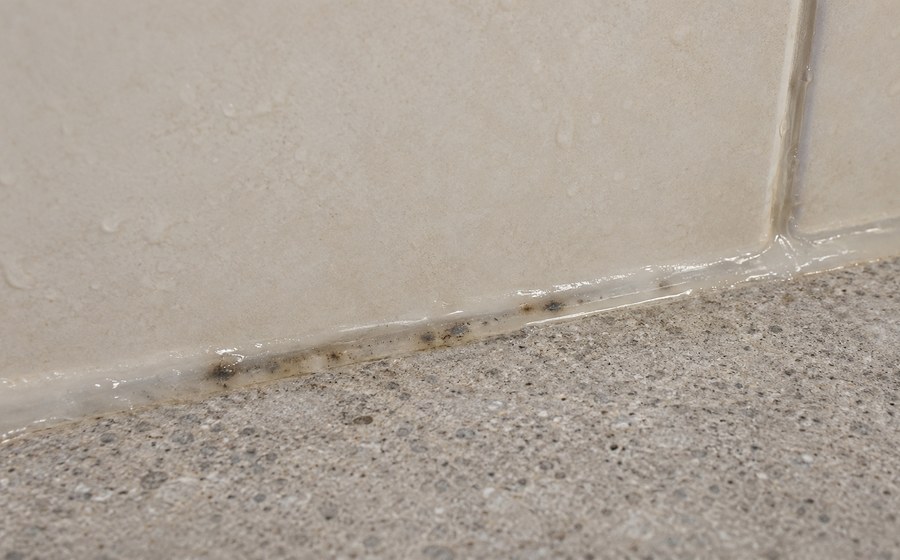
First find out where the mould is. Wipe the bead firmly with a cloth and detergent. If the black comes away, it was on the surface, and regular cleaning will keep it down. To remove mould from shower silicone that is only lightly stained, hold a cloth soaked in the vinegar solution against the bead for an hour, then rinse and dry.
If the black spots are still there afterwards and look as though they are under a clear skin, they are inside the silicone or behind it. No cleaner reaches them. Black mould in shower silicone that will not clean off is the standard sign of a seal that has let water in, and the fix is to cut the old bead out and apply a new one to a clean, dry joint. That is what silicone replacement involves.
How to remove mould from shower grout
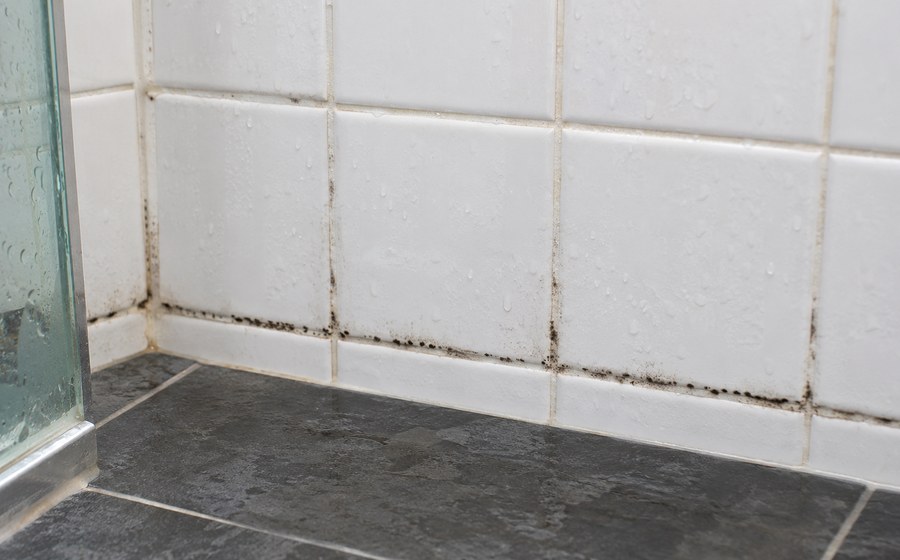
- Wet the grout and apply detergent or the vinegar solution along the joints.
- Leave it for ten minutes so it can soak in.
- Scrub along the joint with a soft nylon brush or an old toothbrush. Wire brushes and scourers wear the grout away.
- Rinse thoroughly and dry the tiles.
- Repeat for stubborn joints before you reach for anything stronger.
Cement grout is porous, so staining can run deeper than a brush reaches. If the joints are clean but still grey, the stain is in the body of the grout. If the grout is crumbling, cracked or missing, cleaning is no longer the point: water is getting past it, and it needs to be replaced. Epoxy grout, which is used in a professional regrout, does not absorb water and gives mould far less to hold on to.
When it means a leak
Shower mould on its own is common and usually harmless to the building. It becomes a warning sign when it shows that water is getting behind the surface.
| Surface mould | Mould caused by a leak | |
|---|---|---|
| Where it is | On top of grout and silicone, across the wet area | Inside or behind the silicone; along one joint or one row of tiles |
| Does it clean off? | Yes, with detergent or vinegar | No, or it returns within weeks in the same place |
| The joint itself | Silicone intact, grout whole | Silicone lifting or gapped, grout cracked or missing |
| Tiles nearby | Solid | Hollow-sounding or loose |
| Other rooms | No sign | Damp, bubbling paint or a musty smell next door or below |
| What it needs | Cleaning and better ventilation | A reseal, a regrout or a leak inspection |
A guide only. One sign from the right-hand column is enough to have the shower looked at.
When cleaning is not enough: calling a professional
Call someone when the mould is behind the silicone, when grout is missing, when tiles have moved, or when there are signs in another room. Replacing one bead of silicone is within reach of a careful owner. Where several joints have failed, professional shower resealing strips and renews every junction in the recess at once and checks the grout the old beads were hiding.
If there is damp outside the shower as well, the fault may be deeper than the seals. In that case book a shower repair inspection, so the leak is traced before anything is replaced. In NSW, anyone you pay to do waterproofing worth more than $5,000 in labour and materials must hold a contractor licence, and plumbing has to be done by a licensed plumber. Our repairs are made from the surface with the tiles left in place and carry a 100% workmanship guarantee in writing.
Keeping mould out of the shower
- Run the fan during the shower and afterwards, and leave the screen door open.
- Squeegee or wipe the walls and screen after the last shower of the day.
- Rinse soap and shampoo residue off the joints once a week.
- Hang wet towels and bath mats somewhere they can dry.
- Clean the first spots as soon as they appear, before they stain.
- Replace silicone at the first sign of lifting.
Frequently asked questions
How do I get rid of black mould in the shower?
Clean it with mild detergent or vinegar diluted four parts to one with water, rinse and dry. Then keep the recess dry between showers with the fan and an open screen. Mould behind the silicone needs the silicone replaced.
How do I remove mould from shower silicone?
Wipe it with detergent, or hold a cloth soaked in diluted vinegar against it for an hour, then rinse and dry. If the spots remain under the surface of the bead, the silicone has to be cut out and replaced.
How do I clean mould from shower grout?
Apply detergent or diluted vinegar, leave it for ten minutes, scrub along the joint with a soft nylon brush, then rinse and dry. Avoid wire brushes, which wear the grout away.
Is black mould in the shower harmful?
NSW Health says most people have no health problems from mould. It can cause a runny or blocked nose, irritated eyes and skin and sometimes wheezing, and may trigger asthma. People with breathing conditions or weakened immune systems are more at risk.
Why does mould grow behind the silicone?
Because the bead has lifted from the tile or the base and water has got in behind it. That water cannot dry out, so mould grows where it cannot be reached. It means the seal has failed.
Should mouldy silicone be cleaned or replaced?
Clean it if the mould is on the surface and wipes off. Replace it if the mould is inside or behind the bead, if the edges have lifted, or if it returns within a few weeks of cleaning.
Mould behind the silicone?
That seal has failed. Book an inspection and a fixed-price quote. We come to you, anywhere in Sydney.
Get my quote