

Shower Leaking Behind the Wall: Causes & Fixes
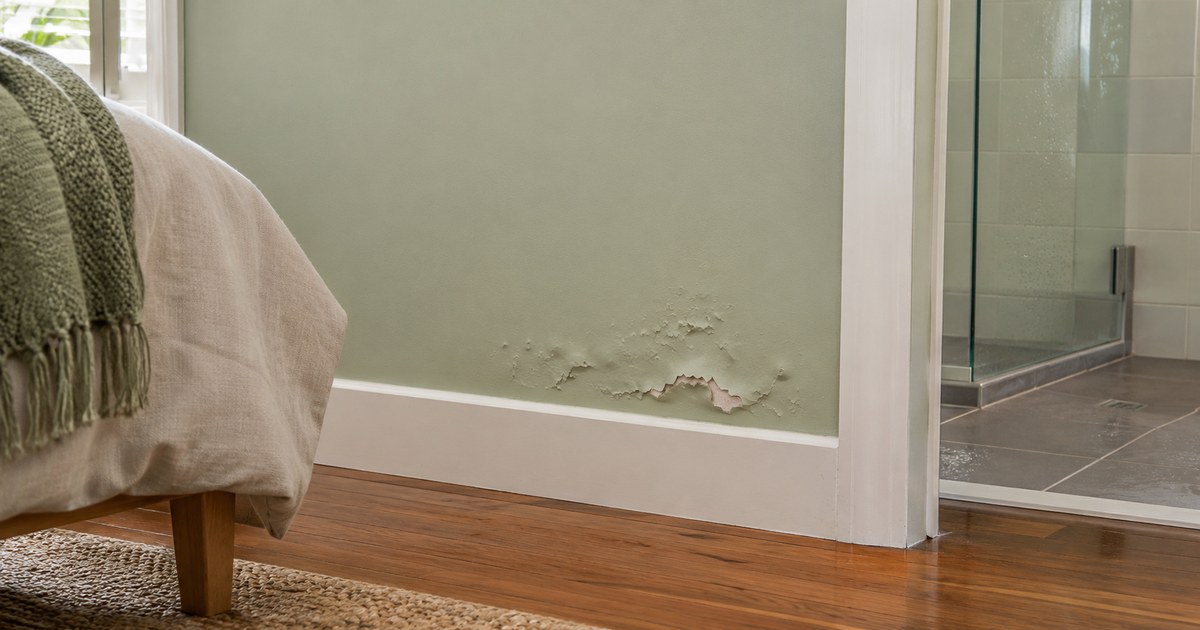
A shower leaking behind the wall is water getting past the tiles and into the wall itself, through cracked grout, failed silicone in the corners, a failed membrane or, less often, a leaking pipe. It shows as damp, bubbling paint or swollen skirting on the other side of the wall, and it can usually be repaired from the shower side without opening the wall.
- Damp, bubbling paint or swollen skirting on the far side of a shower wall means water is coming through that wall.
- A patch that grows after showers and dries out when the shower is not used points to the shower. A patch that is wet all the time points to a pipe.
- Shower-side leaks are normally repaired from inside the shower. The wall does not have to be opened to find them.
The signs
A shower leaking behind wall tiles rarely shows inside the shower. The tiles look fine. The evidence turns up in the bedroom, hallway or wardrobe that backs onto the bathroom, and it is usually low down, because water runs to the bottom of the wall before it soaks through the lining.
| What you notice | What it usually means | How urgent |
|---|---|---|
| Paint bubbling or peeling on the wall behind the shower | Moisture is coming through the wall lining from the shower side | Book an inspection soon |
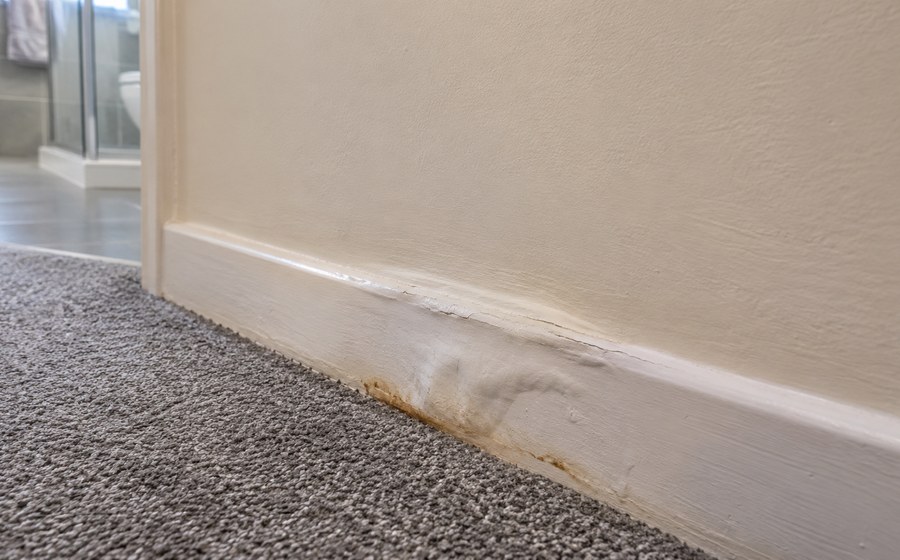
| Skirting board swollen, stained or pulling away | Water has run down inside the wall and is sitting at floor level | Soon: the base of the wall frame is getting wet |
| A damp patch that grows after showers, then fades | A shower-side leak through grout, a corner joint or the membrane | Soon |
| A damp patch that never dries | A pipe or fitting under mains pressure may be leaking | Urgent: call a licensed plumber |
| Musty smell in the wardrobe or room next door | The lining or framing inside the wall is staying damp | Soon |
| Tiles on the shower wall sound hollow or have come loose | Water behind the tiles has broken their bond to the wall | Soon, and avoid spraying that wall |
| Damp around a power point or light switch | Water has reached the wiring inside the wall | Urgent: switch the circuit off and call an electrician |
A guide only. The source is confirmed by an inspection before any repair is priced.
Why it happens
A tiled shower wall is a system of layers: tiles, grout, flexible sealant in the corners, and a waterproofing membrane behind. Water reaches the wall cavity when one of those layers stops doing its job.
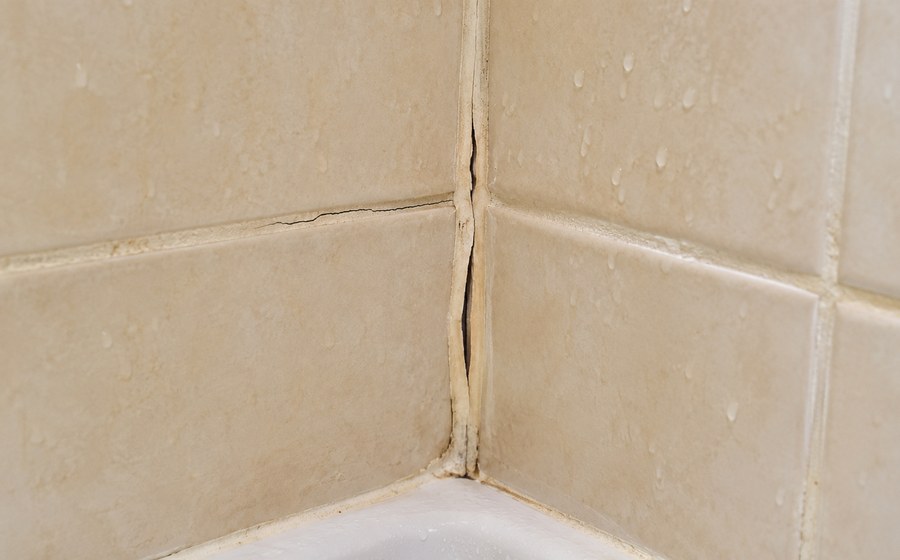
Cracked grout on the shower walls
Cement grout is slightly porous even when new. Once it cracks or wears away, the spray from the shower drives water straight through the joint to whatever is behind the tile.
Failed silicone in the corners
The vertical corners and the line where the walls meet the floor are sealed with silicone because those joints move. When the bead hardens, shrinks or peels, it leaves an open path down the full height of the corner.
A wall membrane that has failed or was never there
The membrane is meant to catch whatever gets past the grout. In many older bathrooms the tiles were fixed straight to the wall sheeting with nothing behind them, and in others the membrane has split with building movement. Either way, the wall sheeting gets wet every time the shower runs.
Gaps around the taps and shower arm
Every tap body and the shower arm passes through the tiles. If the seal behind the cover plates has gone, water running down the wall follows the pipe into the cavity.
A leaking pipe inside the wall
Less often the tiles are not the problem at all. A joint or fitting in the pipework behind them is leaking into the cavity.
How to tell a pipe leak from a shower leak
The two need different trades, so it is worth working out which one you have. The difference is timing. Supply pipes are under pressure all day, so a leaking pipe wets the wall whether or not anyone has showered. A shower-side leak only adds water while the shower is running and shortly afterwards.
- Rest the shower. Use another bathroom for two or three days. If the patch starts to dry, the shower is the source. If nothing changes, suspect a pipe.
- Watch the water meter. With every tap and appliance in the house turned off, check the meter. If it is still moving, a pressurised pipe is leaking somewhere.
- Compare short and long showers. A patch that only appears after a long shower is a small gap in grout, silicone or membrane that takes time to let enough water through.
One case sits in between. The short pipe that runs from the mixer up to the shower rose only carries water while the shower is on, so a leak there behaves like a tile leak. Separating the two takes testing, which is what a leak detection visit is for: moisture readings are mapped across the wall to show where the water starts.
Safe checks before anyone opens the wall
Opening a wall is rarely the first step and should never be a guess. These checks cost nothing and narrow the cause down from the shower side.
- Run a finger along every silicone joint. Gaps, peeling edges and black mould under the surface of the bead all mean the seal has failed.
- Look closely at the grout on the wall that backs onto the damp room, especially the bottom three rows of tiles.
- Tap the tiles with a knuckle. A hollow sound means water has been behind them.
- Check that the tap cover plates sit flat against the tiles and are sealed around the edge.
- Dry the shower, then spray one wall at a time for a few minutes and check the other side an hour later. Note which wall brings the damp back.
Those checks are as far as an owner should go. Call a licensed trade when tiles are loose, when the patch is wet all the time, when new silicone has not stopped it, or when you cannot find a fault on the surface. In NSW, anyone you pay to do waterproofing worth more than $5,000 in labour and materials must hold a contractor licence, and plumbing has to be done by a licensed plumber.
How far the damage spreads inside a wall
Inside the wall, water does not stay where it entered. It runs down the back of the sheeting to the bottom of the frame and spreads sideways along it. Plasterboard softens and swells. A timber frame that stays damp starts to decay, and damp timber is more attractive to termites. Skirting, carpet and built-in wardrobes on the other side are next. In an apartment, the wall may be shared with a neighbour.
That spread is what decides the size of the job. While the damage is limited to the shower side, the repair is a surface one and the wall behind is left to dry. Once the lining or the frame has to be replaced, a plasterer and a carpenter are needed as well, and the bill is for two jobs instead of one.
How we fix it
We start by finding where the water is getting in, because sealing the wrong joint changes nothing. Once the path is known, our shower leak repair service deals with it from inside the shower:
- Failed silicone is cut out of the corners and junctions and replaced.
- Cracked or missing grout is raked out and renewed, with epoxy grout in the shower because it does not absorb water.
- The seals around taps and fittings are renewed.
- Where the membrane itself has failed, the shower area is re-waterproofed.
In most cases the tiles stay where they are. If the membrane has to be renewed, the bathroom waterproofing is carried out to AS 3740 and you receive a waterproofing certificate. Every repair carries our 100% workmanship guarantee in writing. Once the leak is stopped, the wall on the other side needs time to dry before it is repainted.
Keeping water out of the wall cavity
- Replace corner silicone as soon as it peels or grows mould under the bead.
- Have cracked wall grout repaired while it is a few joints.
- Do not drill through shower wall tiles for shelves or rails without sealing the fixing.
- Aim the shower rose away from the door and the tap wall where you can.
- Look at the wall behind the shower a few times a year, low down, where trouble shows first.
Frequently asked questions
How do I know if my shower is leaking behind the wall?
Look at the other side of the wall. Bubbling paint, a damp patch, swollen skirting or a musty smell in the room that backs onto the shower are the usual signs, and they are worst near the floor.
Can a leak behind the shower wall be fixed without removing tiles?
Usually, yes. Most of these leaks come through grout, corner silicone or the seals around fittings, and all of those are repaired from the surface. Tiles only come off when the wall sheeting behind them has broken down.
Do I need a plumber or a waterproofer for a leak in the wall?
A waterproofer if the wall only gets wetter after showers, because the water is coming through the tiled surface. A licensed plumber if the wall is wet all the time or the water meter moves with every tap off.
How do you detect a water leak inside a wall?
Without opening it. Moisture readings are taken across the wall and mapped, which shows where the wall is wettest and where the water starts. Each part of the shower is then tested separately to confirm the entry point.
How long can a shower leak behind a wall go unnoticed?
For months. The water runs down inside the wall before it shows, and furniture or a wardrobe often hides the first patch. By the time paint bubbles, the wall has usually been damp for some time.
Will the wall lining need to be replaced?
Not always. Lining that has only been damp will dry once the leak is stopped and can be repainted. Lining that has gone soft, swollen or mouldy through its thickness needs to be replaced.
Got a leaking shower?
Book an inspection and a fixed-price quote. We come to you, anywhere in Sydney.
Get my quote