

Shower Leaking Through the Floor (or to Downstairs)
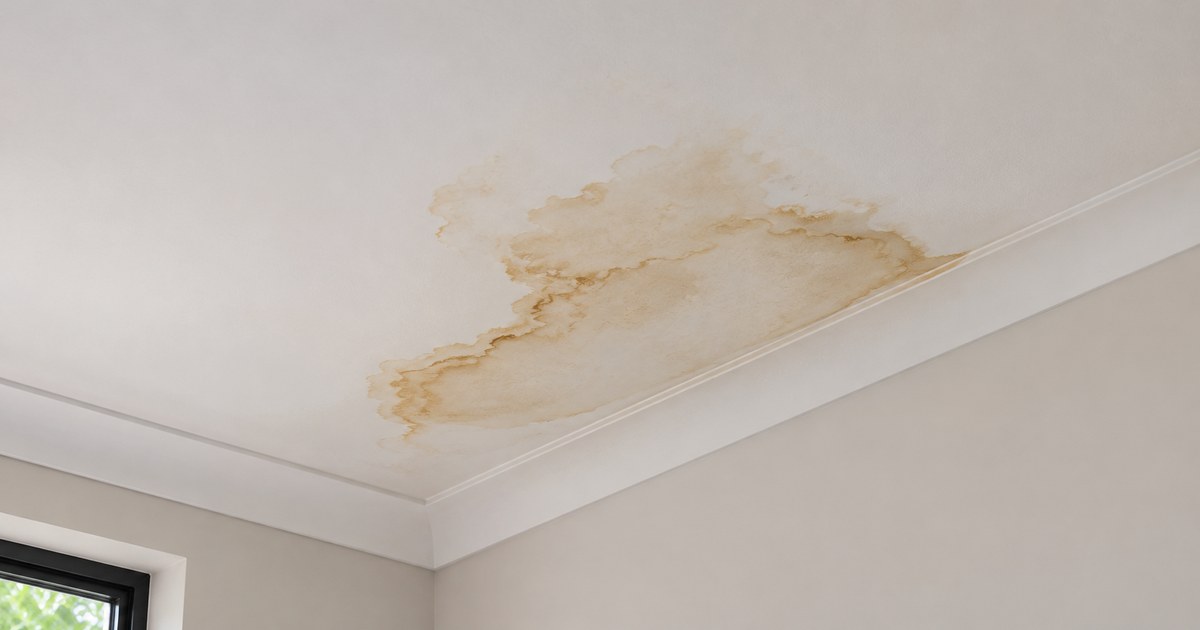
A shower leaking through the floor is letting water out at its lowest point: around the waste, through a cracked base, along the joint where the floor meets the walls, or through a failed membrane under the tiles. On an upper level it shows as a stain on the ceiling below. On a ground floor it shows as damp skirting, carpet or subfloor.
- Floor leaks get out at the waste, the base, the floor-to-wall junction or the membrane. New floor grout on its own rarely stops them.
- Where the stain sits under the shower is the best clue to which of those has failed.
- A cracked base and a failed membrane are different repairs. An inspection tells you which one you are paying for.
Signs a shower is leaking through the floor
A shower leaking through floor tiles does not always drip. More often it leaves marks that build up slowly.
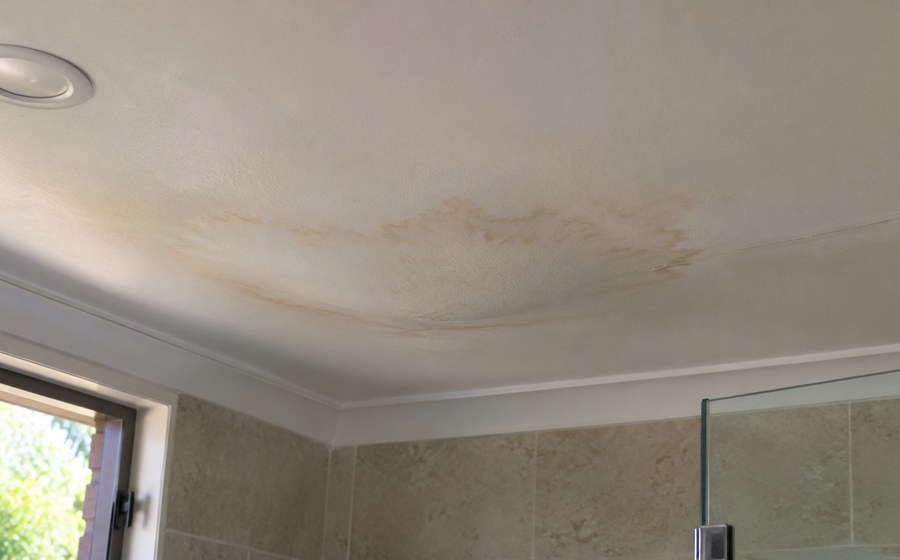
- A yellow or brown stain on the ceiling under the bathroom, often ring-shaped.
- Paint blistering or plasterboard sagging on that ceiling.
- Skirting, carpet or floorboards outside the shower that are damp or discoloured.
- Floor tiles in or beside the shower that rock, sound hollow or have cracked.
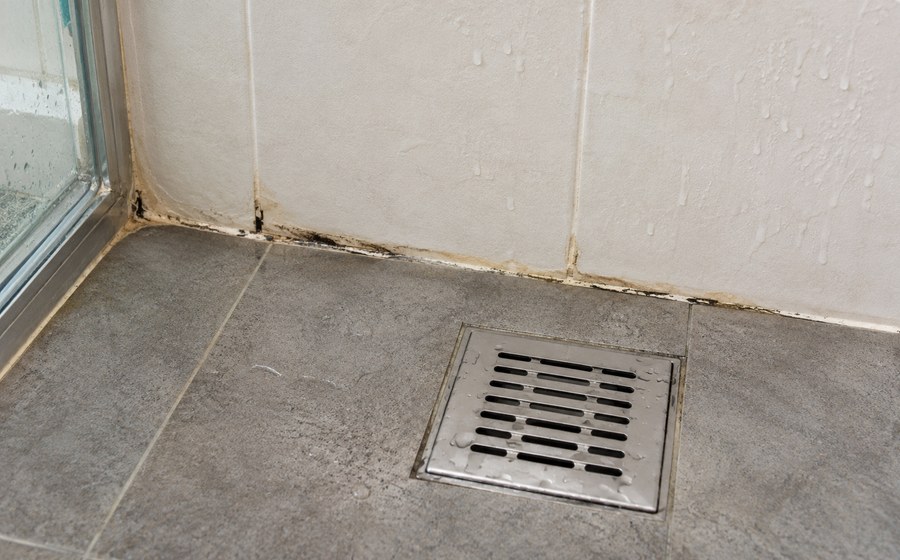
- Grout along the edge of the shower floor that stays dark long after the rest has dried.
- A musty smell downstairs, in the subfloor or in a cupboard under the stairs.
Where the water gets out
All the water in a shower ends up on the floor, so every weakness at floor level is tested every day. There are four places it gets through.
The seal around the waste
The waste is a hole through the floor. If the seal between the waste and the waterproofing has let go, water slips past the outside of the fitting and goes straight down.
The floor-to-wall junction
The joint around the edge of the shower floor is where two surfaces meet and move against each other. When the silicone and the membrane behind it fail there, water runs under the wall tiles and out below.
The base or the hob
A preformed base can crack, and a tiled base or hob can move on its bed. A cracked hob fills with water and releases it slowly, so the leak below carries on well after the shower is turned off.
The membrane under the floor tiles
Floor grout always lets a little water through. The membrane beneath is what stops it. If the membrane has split or was not carried up the walls properly, that water reaches the floor structure.
| Where you see it | Probable source | What to do |
|---|---|---|
| Stain on the ceiling directly under the shower waste | Seal around the waste, or the waste pipe | Inspection: both are tested |
| Stain under the edge of the shower, near a wall | Floor-to-wall junction or membrane | Junction repair or re-waterproofing |
| Stain under the hob or the shower door | Cracked hob or a failed screen seal | Hob and screen repair |
| Damp skirting or carpet outside the shower, same level | Screen seal, hob or floor junction | Reseal first, then retest |
| Wet ground or damp timber under a raised floor | Base, waste or membrane | Inspection from above and below |
| Stain well away from the shower | Water travelling along a joist or slab before it drops | Inspection: do not assume the nearest fitting |
| Dripping that continues when the shower has not been used | A supply or waste pipe | Licensed plumber |
A guide only. More than one of these is often present.
Checks to do before calling a professional
You can narrow a floor leak down with a bucket and some patience. Start with the shower completely dry, and have someone watch the ceiling or subfloor below if you can.
- Test the pipe. Pour a bucket of water slowly straight down the waste without wetting the floor. If the leak appears below, the waste pipe or its connection is at fault, which is plumbing.
- Test the floor. Run the hand shower on the floor only for five minutes, keeping the walls dry. A leak now points to the waste seal, the floor grout, the junction or the membrane.
- Test the hob and screen. Wet the hob, the screen and the door strip. Water outside the shower on the same level points here.
- Look and press. Check the silicone around the floor edge for gaps and press on the floor tiles. Movement or a hollow sound means water is already under them.
If step one shows a leak, call a licensed plumber. For anything else, or if you cannot tell, call a leaking shower specialist. In NSW, anyone you pay to do waterproofing worth more than $5,000 in labour and materials must hold a contractor licence, and plumbing has to be done by a licensed plumber.
Why grout alone will not fix it
Grout is not the waterproofing. It fills the gaps between tiles and takes the wear, and the membrane underneath is what keeps the water in. New floor grout helps when cracked grout was the only way in and the membrane below is sound. It does nothing for a waste seal that has let go, a junction that has opened or a base that has cracked, and those are where most floor leaks start.
That is why a regrout is done together with new silicone at every junction and around the waste, and why the floor is tested afterwards. If water still gets through, the fault is under the tiles.
Base repair or re-waterproofing: which one fixes it
These are the two repairs for a leak that survives a reseal and regrout, and they treat different faults. Our shower base repairs deal with a base or hob that has cracked or moved. A membrane that no longer holds water needs bathroom waterproofing instead.
| Base and junction repair | Re-waterproofing | |
|---|---|---|
| What it treats | A cracked or moved base, a leaking hob, the waste seal | A failed membrane under the tiles |
| Typical sign | Leak under the waste or the hob; visible crack or movement | Leak under the floor edge or across a wide area; hollow tiles |
| Tiles | Stay in place where the base is sound enough to repair | Only the tiles the work requires are lifted |
| Time | The shorter job | Longer, because a new membrane has to cure |
| Paperwork | Written workmanship guarantee | Written guarantee plus a waterproofing certificate to AS 3740 |
Which one applies is decided by testing, not by the age of the bathroom.
What a floor leak does to the room below
Under the shower there is either a timber floor or a concrete slab, and neither copes with being wet every day. In a timber-framed house the sheet flooring swells and the joists stay damp. The ceiling lining below takes up water, stains, sags and grows mould. In an apartment the water finds a crack or a pipe penetration in the slab and comes out in the unit underneath, which turns a repair into a strata matter.
The longer it runs, the more of that has to be put right after the shower itself is fixed: ceiling repairs, painting, sometimes flooring. Stopping the leak early is the cheapest part of the whole job.
Getting it fixed
Fix Leaking Showers inspects the shower, tests the floor, the base and the waste separately, and tells you which has failed. You then receive a fixed-price quote in writing for that repair. Most floor leaks are repaired from the surface with the tiles left in place, and the work carries our 100% workmanship guarantee in writing. Ceiling repairs below are a separate job and should wait until the shower has been fixed and the area has dried.
Keeping a shower floor watertight
- Renew the silicone around the floor edge and the waste when it starts to peel or discolour.
- Keep the waste clear so water does not pond on the floor.
- Do not ignore a floor tile that rocks or sounds hollow.
- Fix cracked floor grout early, and have the junctions resealed at the same visit.
- After a repair, check the ceiling below from time to time. A stain that stops growing is the best proof the leak has gone.
Frequently asked questions
Why is water coming through the ceiling under my shower?
Because water is escaping at floor level: past the waste seal, through a cracked base or hob, along the floor-to-wall junction or through a failed membrane. The stain is not always directly under the fault, so the shower needs to be tested.
Can you fix a leaking shower floor without removing the tiles?
In most cases, yes. The junctions, the waste seal and the grout are all repaired from the surface. Tiles are lifted only where the membrane has to be renewed or the base has to be re-bedded.
Will regrouting stop a shower leaking through the floor?
Only if cracked grout was the sole way in and the membrane under it is sound. If the waste seal, the junction or the base has failed, new grout will not stop the leak.
How do I seal a leaking shower floor?
Renew the silicone around the whole floor edge and the waste, and replace any cracked floor grout. If water still reaches the room below after that, the membrane or the base needs a specialist.
Is a cracked shower base repairable?
Often, yes. A crack in a base that is otherwise solid can be repaired and sealed where it sits. A base that has moved on its bed has to be re-bedded and waterproofed again.
How urgent is a shower leaking through the floor?
Urgent enough to book an inspection now. Every shower adds water to the floor structure and the ceiling below. Stop using that shower if water is near light fittings or the ceiling is sagging.
Got a leaking shower?
Book an inspection and a fixed-price quote. We come to you, anywhere in Sydney.
Get my quote