

Why Is My Shower Leaking? Causes & What To Do
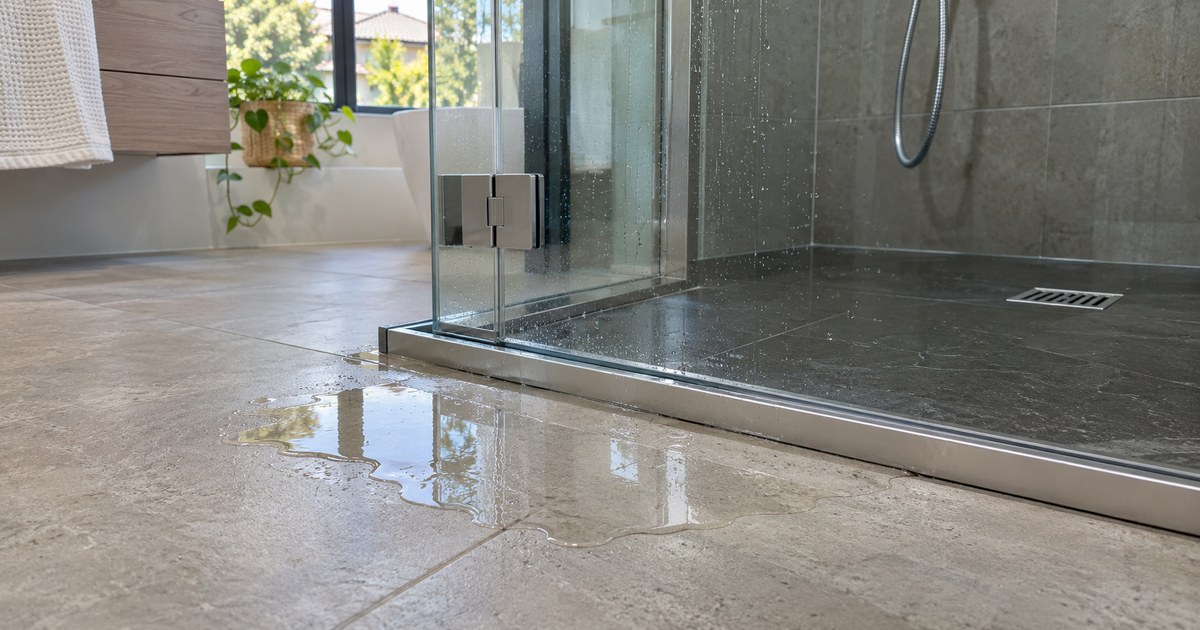
A shower usually leaks for one of four reasons: perished silicone at the joints, cracked or missing grout, a failed waterproofing membrane under the tiles, or a cracked shower base. All four let water escape behind the tiles, and most can be repaired from the surface without removing them.
- Water on the floor outside the screen usually means failed silicone. Damp in the next room or on the ceiling below usually means the membrane or the base.
- A drip from the shower head or tap after the water is turned off is a plumbing fault, not a waterproofing one.
- You can safely check the silicone, grout and screen yourself. Anything under the tiles or inside the wall needs a licensed trade.
The four most common causes
A leaking shower usually comes back to one of four failures, and they tend to happen in the same order as a bathroom ages.
Perished silicone
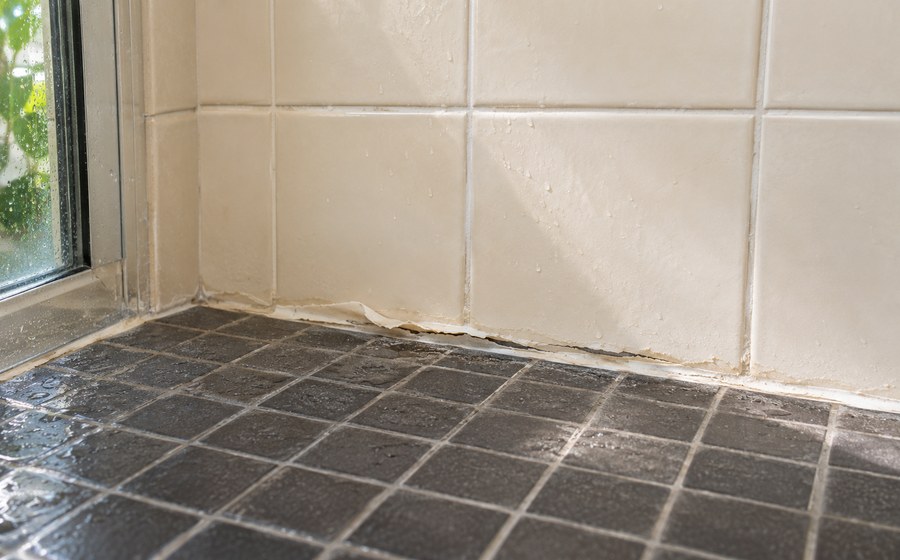
Silicone seals the joints that move: where the walls meet the floor, the internal corners, and around the screen and hob. It hardens, shrinks and peels with age and cleaning products. Once a gap opens, water runs straight behind the tiles every time the shower is used. This is the most common cause.
Cracked or missing grout
Grout fills the fixed joints between tiles. Building movement cracks it and years of cleaning wear it away. Cement grout is porous to begin with, so once it has cracked or fallen out, water tracks through to the tile bed.
A failed waterproofing membrane
Under the tiles is a membrane that is meant to catch whatever gets past the grout. Membranes fail with age, movement or a poor original installation. When one does, water reaches the floor structure and the rooms beside and below the bathroom.
A cracked base or hob
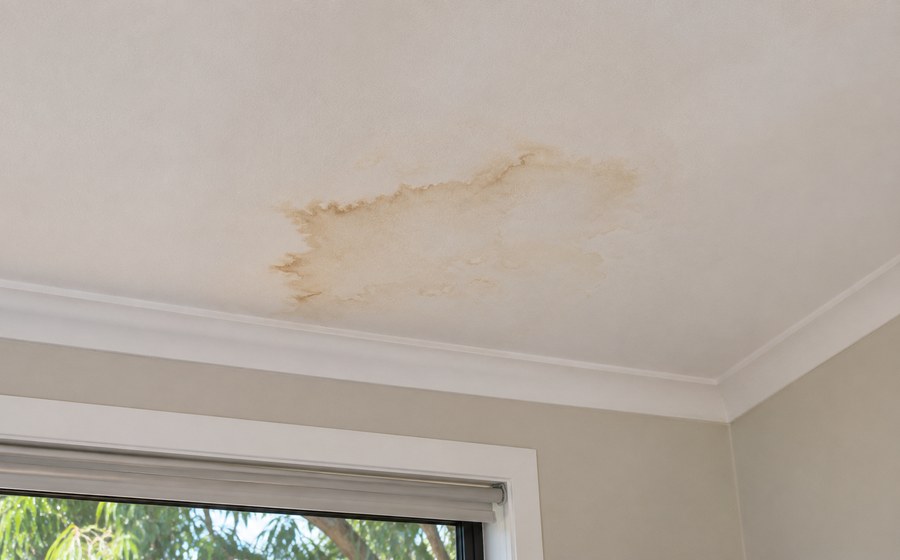
A crack in the shower base, the hob or the seal around the waste lets water out at the lowest point of the shower. These leaks often show first as a stain on the ceiling underneath.
More than one of these is often present at once, which is why guessing at the obvious joint rarely fixes it. An inspection by Sydney leaking shower specialists tells you which ones you have before any money is spent on the wrong repair.
How to tell which one it is
Where the water shows up is the best clue to where it is getting out. Match what you can see to the table below.
| What you notice | Most likely cause | Usual fix |
|---|---|---|
| Water on the floor outside the screen | Failed silicone or screen seal | Reseal the junctions and screen |
| Grout that stays dark and damp, or is crumbling | Cracked or missing grout | Regrout, then reseal the junctions |
| Damp patch, bubbling paint or swollen skirting in the next room | Failed membrane or wall junction | Re-waterproof the affected area |
| Stain on the ceiling below the bathroom | Base, waste or floor junction, sometimes the membrane | Base and junction repair, or re-waterproofing |
| Loose or hollow-sounding tiles | Water sitting under the tile bed | Inspection first, often membrane work |
| Dripping from the shower head or tap when the water is off | Worn washer, cartridge or valve | Tap or shower head repair (plumbing) |
| A wet wall with no fault visible in the shower | Leaking pipe or fitting inside the wall | Licensed plumber |
A guide only. Two causes often occur together, so confirm with an inspection before paying for a repair.
If the water is also showing on the walls of the room next door, read water leaking through the bathroom walls for the causes specific to that symptom.
Leaking when the shower is on, or when it is off?
The timing tells you which trade you need. A leak that appears only while the shower is running, or in the hour after, is water escaping the wet area through silicone, grout, the membrane or the base. A drip that carries on after the taps are turned off is a plumbing fault in the tap, mixer or shower head. Damp that is there all the time, whether or not anyone has showered, points to a supply pipe.
A leak that comes and goes is still a failed seal. A small gap may only let water through after a long shower, or when the spray hits one particular wall, so the damp patch appears some days and not others. It does not heal, and each wetting widens the path.
What you can check yourself and when to call a licensed waterproofer
You can narrow the cause down safely without tools, and it is worth doing before you call anyone because it makes the inspection faster.
- Look along every silicone joint for gaps, peeling edges or black mould growing under the surface of the bead.
- Look for cracked or missing grout, especially in the row of joints where the floor meets the wall.
- Press on the tiles near the floor. A hollow sound or any movement means water has been getting behind them.
- Check the screen seals and the strip along the bottom of the door.
- Check the room next door and the ceiling below for stains, bubbling paint or a musty smell.
- Dry the shower fully, then run water on the floor only for a few minutes. Later, wet one wall at a time. Note which test brings the damp back.
Call a licensed waterproofer when tiles are loose, when the damp is in another room or the ceiling below, when new silicone has not stopped the leak, or when you cannot find any fault on the surface. In NSW, anyone you pay to do waterproofing worth more than $5,000 in labour and materials must hold a contractor licence, and plumbing beyond repairing a tap or showerhead must be done by a licensed plumber.
What a leak costs you if it is left
A leaking shower does not stay the same size. Water behind the tiles soaks the wall sheeting and framing, lifts tiles, feeds mould and, in an apartment, damages the unit below. Caught while it is still a silicone or grout fault, the repair is done from the surface in a few hours. Left until the membrane and the structure under it are damaged, the same shower can need part of the bathroom rebuilt, which costs many times more and takes weeks instead of a day.
How to prevent the next leak
- Replace silicone at the first sign of peeling or mould under the bead. It is the cheapest part of the shower and the first to fail.
- Have cracked or missing grout repaired while it is still a few joints, not a whole wall.
- Go easy on harsh cleaners and stiff brushes, which wear away both grout and silicone.
- Run the exhaust fan or open a window after showers so the recess dries out between uses.
- Do not ignore a single loose tile. It is a sign water is already behind it.
What to do next
If your checks point to the silicone, shower resealing is usually the whole repair. If they point to the grout, the membrane or the base, or you cannot tell, book a leak inspection. We come to you, find the actual leak path and give you a fixed-price quote in writing before any work starts.
Frequently asked questions
Why is my shower leaking only sometimes?
An intermittent leak is a small gap in the silicone, grout or membrane that only lets water through at certain volumes or spray angles. It is still a failed seal, and it gets worse with every shower.
Can I fix a leaking shower myself?
You can replace failed silicone yourself if you remove all of the old bead and let the joint dry first. If the grout, the membrane or the base has failed, a surface patch will not hold and the repair needs a specialist.
Is a leaking shower urgent?
Yes. Water escaping behind tiles damages wall sheeting, framing and the room below, and the repair grows with it. A leak caught early is usually a few hours of surface work.
Do you have to remove the tiles?
Usually not. Most leaks are treated from the surface by resealing, regrouting or re-waterproofing, so the tiles stay where they are. Tiles only come up when the structure underneath has failed.
How do I find where my shower is leaking from?
Dry the shower, then wet one area at a time: the floor first, then each wall, then the screen. The test that brings the damp back shows which zone is leaking. A specialist confirms it with moisture readings.
Why is my shower leaking into the room below?
Water reaching the ceiling below is getting out at floor level: through the base, the waste seal, the floor-to-wall junction or a failed membrane. It needs an inspection, because the stain is rarely directly under the fault.
Can a shower leak through the grout?
Yes. Cement grout is porous, and once it is cracked or missing water passes straight through to the tile bed. If the membrane underneath is sound it is contained; if not, it shows up as a leak.
Why is my shower head leaking?
A shower head that drips after the water is turned off has a worn washer, cartridge or valve seat. That is a plumbing repair and is separate from water leaking through the tiles.
Got a leaking shower?
Book an inspection and a fixed-price quote. We come to you, anywhere in Sydney.
Get my quote