

How Often Should You Reseal or Regrout a Shower?
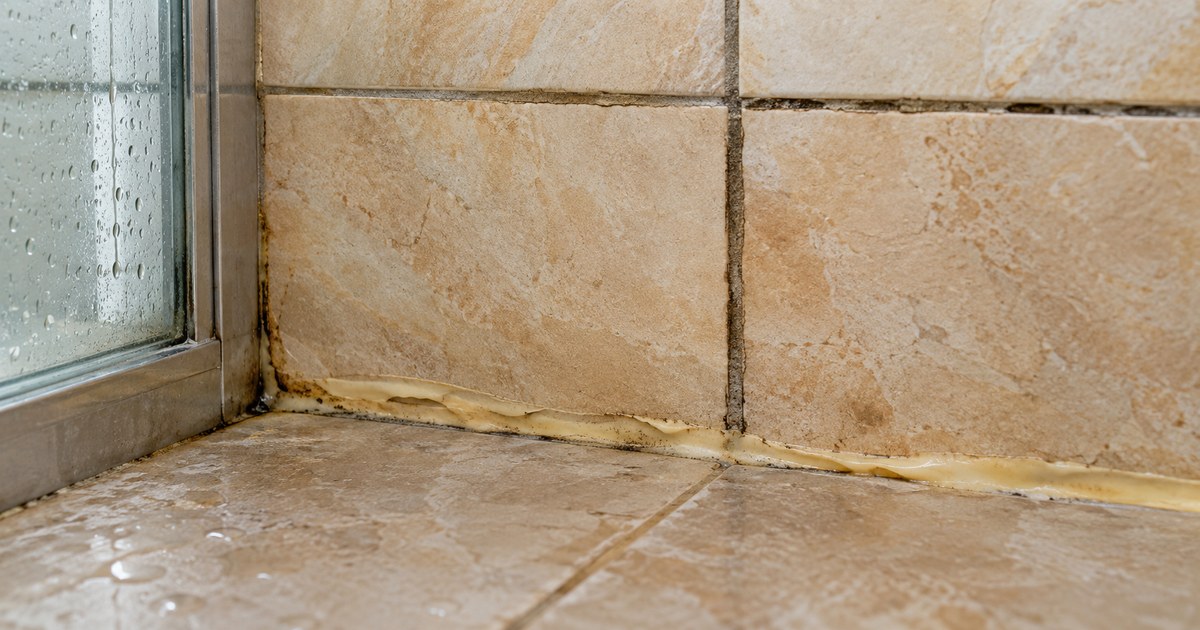
Reseal a shower when the silicone starts to peel, crack or grow mould underneath, which in a shower used every day is usually every few years. Regrout when the grout cracks, crumbles or goes missing, which takes much longer. There is no fixed schedule for either. Check the joints twice a year and act on what you see.
- Silicone is the first part of a shower to wear out. Expect to renew it every few years.
- Grout lasts far longer than silicone. Epoxy grout lasts longer than cement grout.
- Go by condition. A six-monthly check tells you more than any rule of thumb.
How often to reseal
Silicone seals the joints that move: the floor edge, the wall corners and around the screen. It is flexible, and that flexibility wears out. In a family shower used several times a day, the bead can need replacing within a few years. In a guest ensuite it can last much longer. The honest answer to how long shower sealant lasts is that it depends on use, ventilation and how it was applied, so check it and replace it on condition.
When it is due, shower resealing replaces every junction in one visit. It is the cheapest maintenance a shower needs and the one that prevents the most damage.
How often to regrout
How often to regrout a shower depends mostly on the type of grout. Cement grout is porous and wears with cleaning, and it cracks when the building moves, but it still outlasts several rounds of silicone. Epoxy grout does not absorb water and is much harder wearing, so a shower regrouted in epoxy should not need it again for a very long time.
Grout does not wear evenly. The floor and the bottom rows of the walls go first, because they are wet longest. When it is time, shower regrouting rakes out the failed joints and renews them.
What shortens the life of silicone and grout
- Poor ventilation. A recess that never dries keeps the joints wet and grows mould under the bead.
- Harsh cleaners. Bleach-based sprays and acidic cleaners attack both silicone and cement grout.
- Abrasive scrubbing. Stiff brushes and scourers wear grout away.
- Building movement. New homes settling and timber floors moving with the seasons open joints early.
- Heavy use. More showers a day means more hours wet.
- How it was done. Silicone applied over old sealant or a damp joint fails within months.
- Ponding. Water that sits on the floor or the hob keeps the lowest joints under water.
The signs it is time
Signs the silicone is due
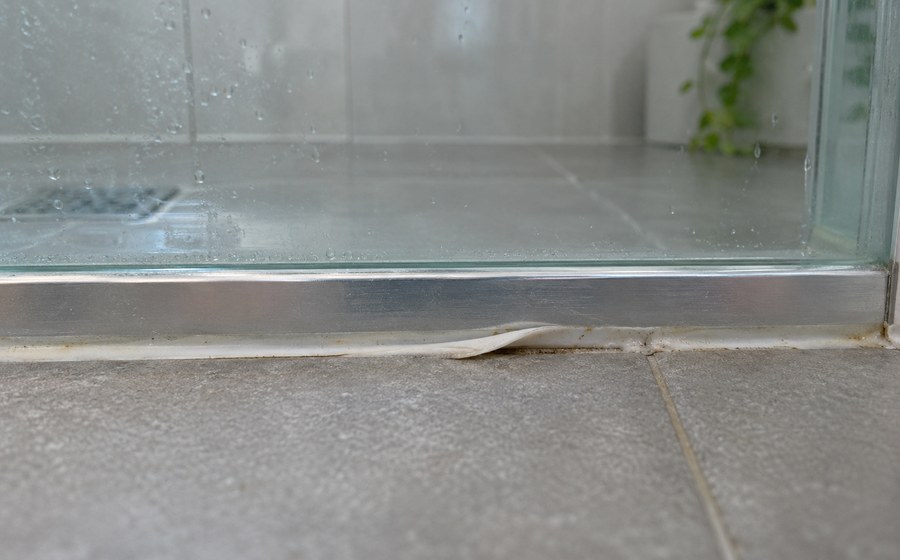
- Edges lifting or peeling away from the tile.
- Gaps, splits or shrinkage along the bead.
- Black mould under the surface that does not clean off.
- Water on the floor outside the screen.
Signs the grout is due
- Cracks along the joints, especially on the floor.
- Grout that has crumbled, turned powdery or fallen out.
- Joints that stay dark long after the rest has dried.
- Staining that returns soon after cleaning.
Damp in the next room, a stain on the ceiling below or tiles that sound hollow are past the maintenance stage. They mean water is already behind the tiles.
Reseal or regrout: which one is due
| Job | What it fixes | How long it lasts | Sign it is due |
|---|---|---|---|
| Reseal (silicone) | Perished moving joints: floor edge, corners, screen | The shortest-lived part: a few years in a busy shower | Peeling, gaps, mould under the bead |
| Regrout | Cracked or missing grout between the tiles | Much longer than silicone; longest with epoxy grout | Cracks, crumbling, joints that stay dark |
| Re-waterproof | A failed membrane under the tiles | Meant to last as long as the tiling over it | Damp in other rooms, hollow tiles, leaks after a reseal and regrout |
A guide only. Actual life depends on use, ventilation, materials and workmanship.
Asked how long waterproofing lasts, the fair answer is the same: a sound membrane should outlast the tiles, and it is the seals and grout above it that need periodic attention.
Checking it yourself versus a professional inspection
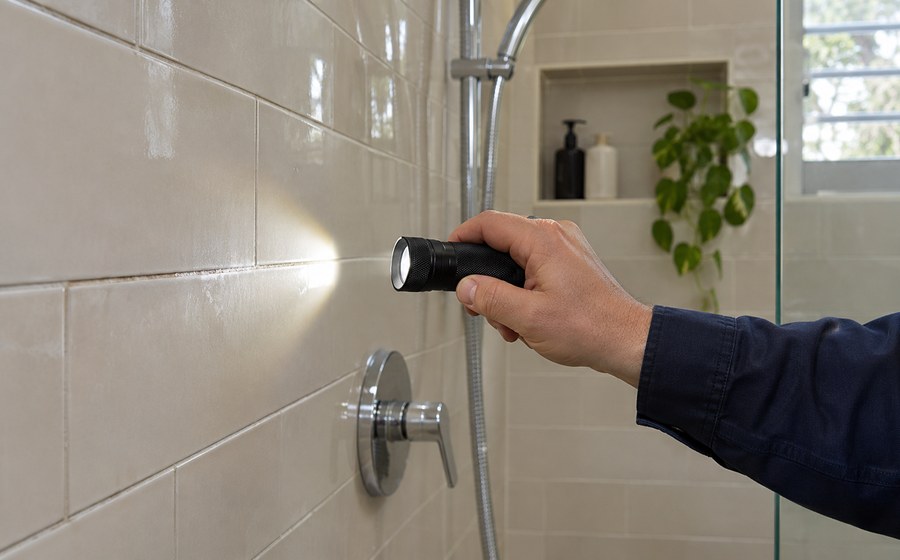
A check you do yourself is enough for routine maintenance. Run a finger along each bead, look along the grout lines with a torch, tap the tiles near the floor and look at the walls of the room behind. If all you find is a tired bead, you can replace it, and how to reseal a shower sets out the method.
A professional inspection is worth having when the signs do not add up: a leak with no visible fault, damp outside the shower, or a problem that has returned after a repair. Moisture readings show whether water has got past the surface, which eyes cannot. Any repair below the tiles is licensed work. In NSW, anyone you pay to do waterproofing worth more than $5,000 in labour and materials must hold a contractor licence.
A simple shower maintenance routine
- After each shower: run the fan and leave the door or curtain open.
- Once a week: rinse soap residue off the joints and wipe the screen.
- Once a month: clean with a mild detergent and a soft cloth, and look for the first spots of mould.
- Twice a year: check every bead and grout line, tap the lower tiles and look at the rooms beside and below.
- When a sign appears: deal with it then. A lifting bead is a small job. The damage behind it is not.
Frequently asked questions
How often should you reseal a shower?
When the silicone shows wear, not by the calendar. In a shower used daily that is usually every few years. Peeling edges, gaps and mould under the bead all mean it is due now.
How often should a shower be regrouted?
Only when the grout has cracked, crumbled or gone missing. Cement grout lasts considerably longer than silicone, and epoxy grout longer still. Check the floor and the bottom rows of tiles first.
How long does shower silicone last?
It varies with use and ventilation. In a busy family shower a bead can need replacing within a few years, and in a lightly used ensuite it can last much longer. Replace it on condition.
How long does epoxy grout last?
A long time. Epoxy grout does not absorb water and resists wear and cleaning far better than cement grout, so it is rarely the part of a shower that fails.
Should I reseal and regrout at the same time?
It makes sense when both are worn, because the silicone has to come out for a regrout anyway and one visit costs less than two. If the grout is sound, a reseal on its own is enough.
What happens if I never reseal my shower?
The silicone eventually opens and water runs behind the tiles each time the shower is used. Over time that damages the tile bed, the wall lining and the rooms beside and below, and a small maintenance job becomes a repair.
Got a leaking shower?
Book an inspection and a fixed-price quote. We come to you, anywhere in Sydney.
Get my quote