

Shower Waterproofing Membranes Explained
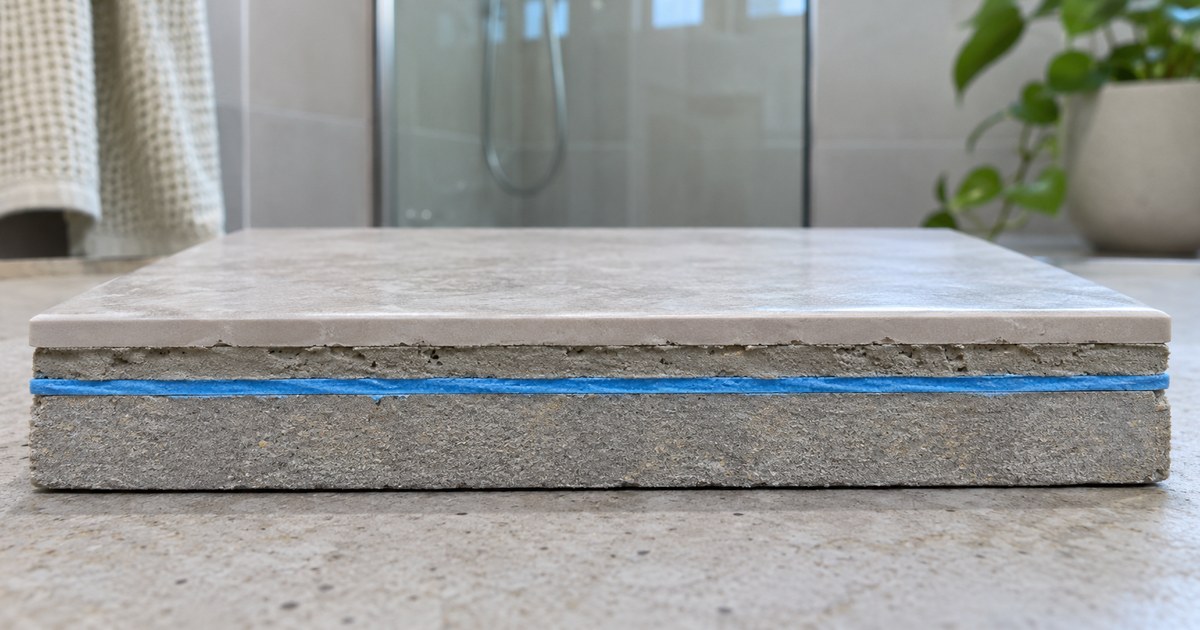
A shower waterproofing membrane is a continuous waterproof layer applied to the floor and walls before tiling. Tiles and grout are not waterproof on their own, so the membrane is what stops water reaching the structure. There are two main kinds, liquid-applied and sheet. For most showers the choice matters less than how well it is installed.
- The membrane is the waterproofing. Tiles and grout are the wearing surface over it.
- Liquid membranes suit the corners and penetrations of a shower. Sheet membranes give a factory-set thickness.
- We do not sell membranes. This guide explains them so you can understand a quote or a repair.
What the membrane under a shower is for
Grout is porous and tiles have joints, so some water always gets below the surface of a shower. The membrane is the layer underneath that catches it and sends it to the waste. It covers the shower floor, runs over the hob, turns up the walls and is sealed around the waste, the taps and the shower arm, so that the whole recess behaves like a shallow tray.
A waterproof membrane for shower walls and floors also has to stretch. Buildings move, most of all at corners and where the wall meets the floor, and a membrane that cannot move with them tears. That is why flexibility and junction detailing matter as much as the product’s resistance to water.
Liquid-applied membranes
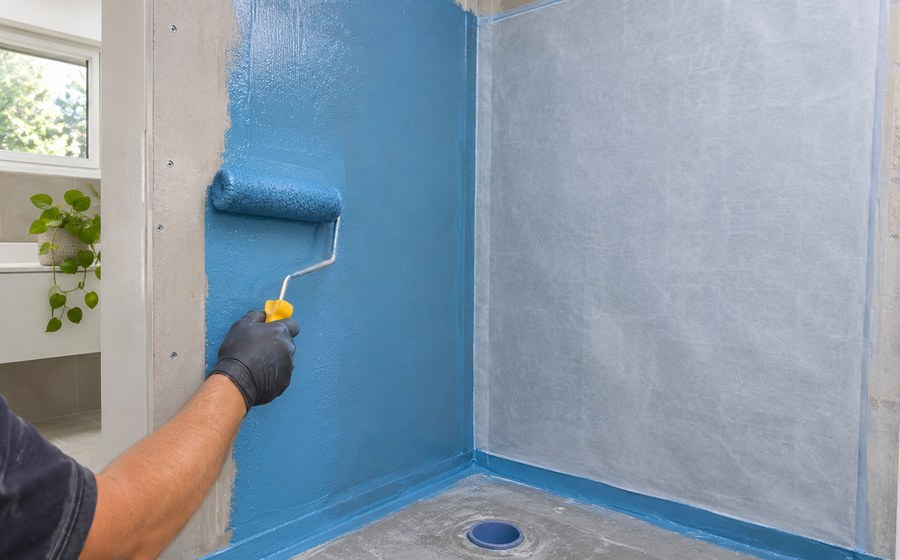
A liquid membrane is painted, rolled or trowelled on and cures into a seamless rubbery film. Because it goes on wet, it follows every corner, niche and pipe, which is why it is the usual choice in showers. Common chemistries are water-based acrylic and polyurethane, and cement-based products modified with polymer.
- Strengths: seamless, easy to work around complex shapes, reinforced at junctions with fabric or bandage.
- Weaknesses: thickness depends entirely on the applicator, each coat has to cure, and thin spots are invisible once it has dried.
Sheet membranes
A sheet membrane arrives as a roll of manufactured material that is bonded to the surface with adhesive, with the laps and corners sealed using bands, pre-formed corner pieces and sealant. The thickness is set in the factory, so it is the same everywhere.
- Strengths: consistent thickness, no curing time for the sheet itself, tolerant of minor cracks in the surface below.
- Weaknesses: every lap, corner and penetration is a join that has to be sealed by hand, and a shower has a great many of them.
Which is right for your shower
| Liquid-applied | Sheet membrane | |
|---|---|---|
| Best for | Showers, small floors and complex shapes | Larger, flatter areas |
| Application | Rolled or brushed on in coats | Bonded in sheets, with sealed laps |
| Thickness | Depends on the applicator | Set in the factory |
| Weak point | Thin spots and rushed curing | Laps, corners and penetrations |
| Curing before tiling | Required for each coat | Little or none for the sheet |
| Standard for internal wet areas | AS 3740 | AS 3740 |
For a typical shower recess, with its corners, hob, niche and waste, a liquid system is the common answer because there are no joins to seal. Sheet systems come into their own on bigger floors. Either type, installed to the standard, will do the job. Either type, installed badly, will leak. When we carry out bathroom waterproofing, the system is chosen to suit the surface and the area, and the work is certified to AS 3740.
Signs a membrane has failed
- Damp, bubbling paint or swollen skirting in the room next to the shower.
- A stain on the ceiling below the bathroom.
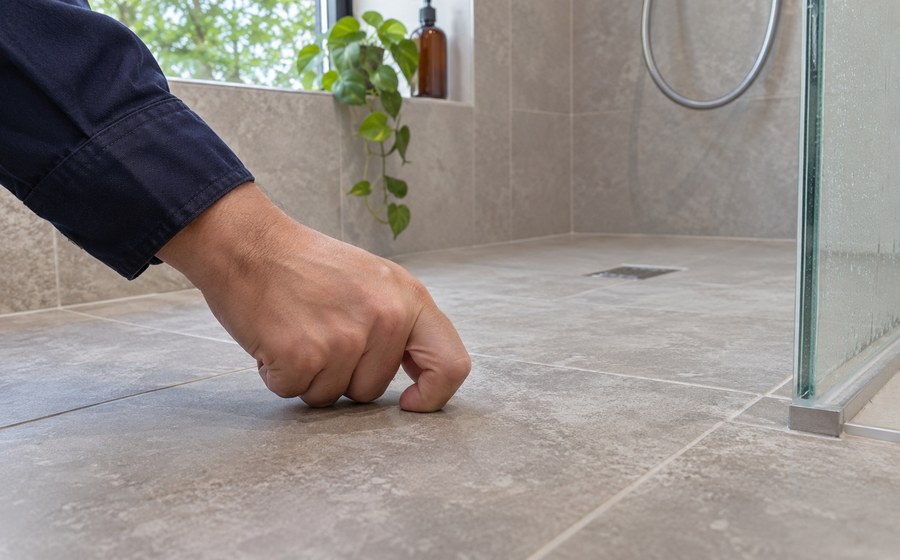
- Tiles that sound hollow, have lifted or have cracked in a line.
- Grout that stays dark and never dries, across an area and not just one joint.
- A musty smell that returns after cleaning.
- A leak that continues after a proper reseal and regrout.
The last one is the test. Silicone and grout are the first parts of a shower to wear and the cheapest to fix, so they are ruled out first. If the shower still leaks once they are sound, the membrane is the remaining suspect.
Choosing a membrane yourself versus leaving it to the waterproofer
Membranes are sold in hardware stores, and it is tempting to pick one by price or by the claims on the tub. The product is the smaller half of the decision. A membrane only performs as part of a system: the right primer for the surface, reinforcing at the junctions, a compatible tile adhesive and the correct cure time. Mixing brands or skipping a component can void the manufacturer’s warranty and, more to the point, the waterproofing.
A licensed waterproofer chooses a system they know, applies it to the manufacturer’s specification and certifies the result. In NSW, anyone you pay to do waterproofing worth more than $5,000 in labour and materials must hold a contractor licence. If you want to follow what they are doing, how to waterproof a shower walks through the steps.
How long a shower membrane lasts
A membrane is meant to last as long as the tiles above it. It sits out of the light, is not walked on and is not cleaned, so nothing wears it directly. When membranes fail early, the cause is usually one of these: building movement that tore it at a junction, poor preparation so it never bonded, too thin a coat, a penetration that was not sealed, or damage before the tiles went down.
You cannot maintain a membrane, but you can protect it. Keeping the silicone and grout above it in good order limits how much water reaches it, and that is the whole of membrane maintenance.
Frequently asked questions
What is the best waterproof membrane for a shower?
There is no single best product. For most showers a liquid-applied membrane suits the corners and penetrations. What matters more is that it is a complete system, applied to the right thickness and certified to AS 3740.
Is a liquid or a sheet membrane better?
Neither is better in every case. Liquid membranes are seamless and suit the shape of a shower. Sheet membranes have a factory-set thickness and suit larger, flatter areas, but depend on well-sealed joins.
How long does a waterproofing membrane last?
It is meant to last as long as the tiling over it. Membranes that fail early have usually been torn by building movement, applied too thinly, or laid on a poorly prepared surface.
Can a membrane be applied over tiles?
A membrane that meets the standard is applied to the surface under the tiles. Coatings brushed over tiles are sealers, not membranes. Where the membrane has failed, tiles in that area are lifted so a new one can be laid.
How thick should a shower membrane be?
As thick as the manufacturer specifies for that product. Liquid membranes have a minimum dry film thickness on their data sheet, usually reached in two or more coats. Sheet membranes come at a fixed thickness.
How do I know if my membrane has failed?
Look for damp in the next room, a stain on the ceiling below, hollow-sounding tiles and a leak that continues after the silicone and grout have been renewed. An inspection with moisture readings confirms it.
Got a leaking shower?
Book an inspection and a fixed-price quote. We come to you, anywhere in Sydney.
Get my quote