

Mould on the Bathroom Ceiling: Why It Keeps Coming Back
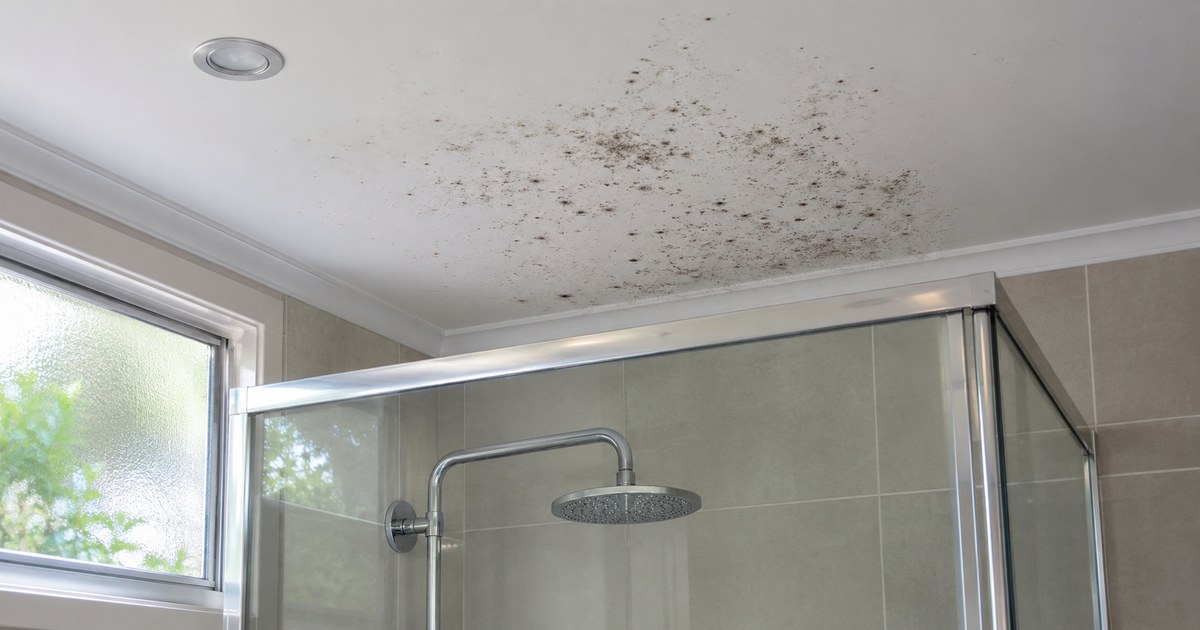
Mould on a bathroom ceiling grows because the ceiling stays damp. The moisture comes from one of two places: steam that condenses because the room is not ventilated well enough, or water leaking from a shower, pipe or roof above. Cleaning removes the mould for a while. It only stays away when the source of the moisture is dealt with.
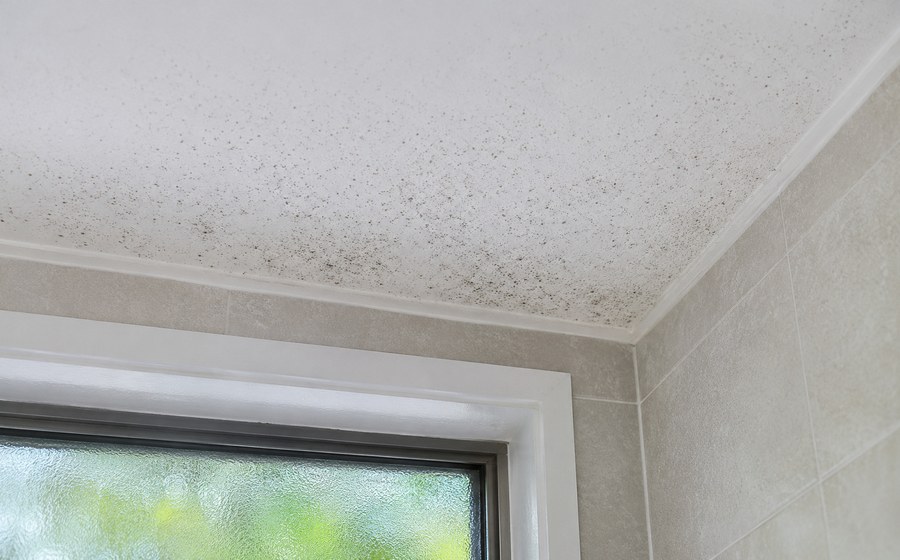
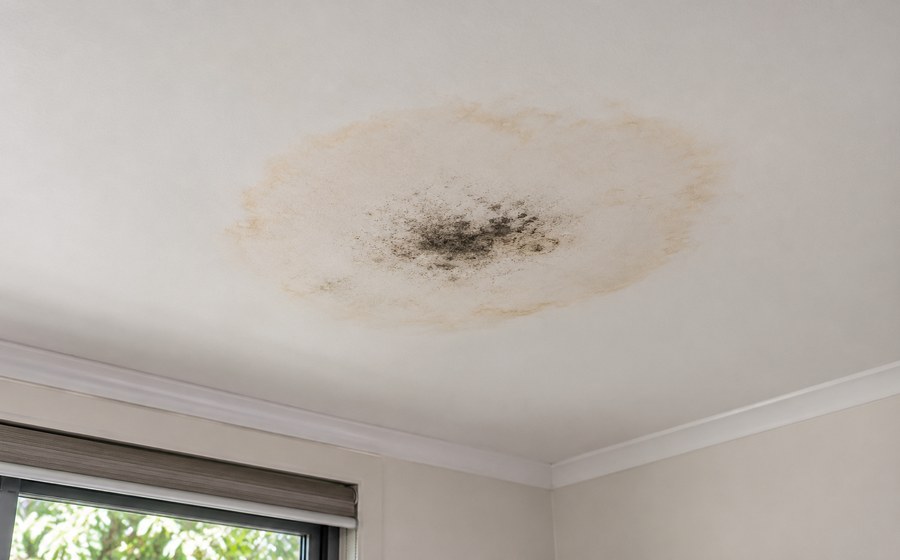
- Even speckling across the ceiling is condensation. One patch with a stain, especially under a bathroom above, is a leak.
- Clean with detergent or diluted vinegar, dry the surface, and never mix cleaning products.
- If it is back within weeks, the moisture source has not been fixed.
Condensation vs a leak
Mould in bathroom ceiling paint needs only moisture and something to feed on, and bathroom ceilings supply both. The first job is to work out where the moisture comes from, because the two causes have nothing in common when it comes to the fix.
| Ventilation (condensation) mould | Leak mould | |
|---|---|---|
| Where it grows | Across the ceiling, worst above the shower and in the corners | One patch, wherever the water arrives |
| Pattern | Even grey or black speckling | A concentrated patch, often with a yellow or brown ring |
| The ceiling itself | Paint intact and flat | Paint blistered, plaster soft or sagging |
| When it is worst | In winter and after long, hot showers | After the shower above is used, or after rain |
| What is above | Does not matter | A bathroom, a pipe run or the roof |
| After cleaning | Returns slowly, over the whole area | Returns quickly, in the same spot |
| What fixes it | Extraction, airflow and warmth | Repairing the leak above |
Both can be present at once in a bathroom with a poor fan and a bathroom above it.
How to remove mould from a bathroom ceiling
The method below follows the NSW Health mould fact sheet. It is for painted ceilings that are otherwise sound.
- Protect yourself. You are working overhead, so wear safety glasses, rubber gloves and old clothes. Open the window and the door.
- Start mild. Use a mild detergent in water, or vinegar diluted at four parts vinegar to one part water.
- Wipe, do not scrub dry. Use a damp cloth or sponge and rinse it often. Brushing or sanding dry mould puts it into the air.
- Use bleach only if you have to. For mould that will not come off, NSW Health gives a dilution of 250 mL of bleach in 4 litres of water, with PVC or nitrile gloves and safety glasses, in a well-ventilated room.
- Dry the ceiling completely. Wipe it down and leave the fan running and the window open.
- Repaint only when it is clean and dry. A mould-resistant bathroom paint helps, but only over a ceiling that is no longer getting wet.
Why it comes back after cleaning
Cleaning removes what has grown. It does not change how wet the ceiling gets. A hot shower fills the room with water vapour, the vapour meets the coolest surface, which is usually the ceiling, and turns back into water there. If that happens every day and the ceiling never fully dries, mould regrows from spores that are always in the air.
The usual reasons are an exhaust fan that is too weak, a fan that vents into the roof space instead of outside, a fan that is switched off as soon as the shower ends, or no fan and a window that stays shut. If none of those applies and the mould still returns to one spot, the moisture is coming through the ceiling, not from the room.
When it is a shower above
In a two-storey home or an apartment, a patch of mould on the ceiling is often the first sign of a leaking shower on the floor above, before any stain or drip. Look for a patch directly under that shower, a faint ring around it, paint that has lifted, and growth that speeds up when the upstairs shower is in heavy use. Black mould on a bathroom ceiling in one tight patch is the pattern to take seriously.
Once the plaster is stained or dripping, the problem has moved on to water leaking through the bathroom ceiling, which covers how to make the room safe and who to call. If you cannot tell whether the moisture is steam or a leak, leak detection settles it with moisture readings across the ceiling and tests on the shower above.
Cleaning it yourself versus fixing the cause
Cleaning is an owner’s job when the mould is on the surface, the ceiling is sound and the cause is steam. Improving the ventilation is the second half of the same job. Replacing or upgrading a fan is electrical work and needs a licensed electrician.
Cleaning is the wrong answer when the cause is a leak. The mould will be back in the same place within weeks, and each cycle of wetting weakens the plasterboard. That calls for the leak to be found and repaired, and tracing a leak or repairing what is under the tiles above is licensed work. In NSW, anyone you pay to do waterproofing worth more than $5,000 in labour and materials must hold a contractor licence, and plumbing has to be done by a licensed plumber. Large areas of mould, or mould in a ceiling that has been wet through, are better left to a professional cleaner once the leak is fixed.
Fixing it for good
For steam, fixing it for good means getting the moist air out: a fan that is ducted to the outside, run during the shower and for a while after, with a gap under the door so air can get in. For a leak, it means repairing the source. Where that source is a shower above, Fix Leaking Showers inspects it, tests the floor, base, waste and junctions, and repairs the part that has failed, usually from the surface with the tiles left in place. The repair carries our 100% workmanship guarantee in writing. The ceiling is cleaned, dried and repainted afterwards, not before.
How to prevent mould on a bathroom ceiling
- Turn the exhaust fan on before the shower and leave it running afterwards.
- Open the window when the weather allows.
- Leave the bathroom door open after showering so the room dries.
- Wipe condensation off the ceiling in winter if it beads.
- Keep the fan grille clean so it moves air properly.
- Have any leak above the ceiling repaired before you repaint.
Frequently asked questions
How do I get rid of mould on my bathroom ceiling?
Wipe it off with mild detergent or vinegar diluted four parts to one with water, using a damp cloth, then dry the ceiling fully. To keep it away, fix the moisture: better ventilation for steam, or a repair if there is a leak above.
Why does mould keep coming back on the bathroom ceiling?
Because the ceiling is still getting damp. Either steam is condensing on it every day for lack of ventilation, or water is coming through from a shower, pipe or roof above. Cleaning does not change either.
Is mould on the bathroom ceiling dangerous?
NSW Health says most people have no health problems from mould, but it can cause a runny or blocked nose, irritated eyes and skin and sometimes wheezing, and can trigger asthma. People with breathing conditions or weakened immune systems are more at risk.
Does mould on the ceiling mean there is a leak?
Not necessarily. Even speckling across the ceiling is usually condensation. A single patch, especially with a stain, blistered paint or a bathroom above it, suggests a leak and should be checked.
Can I paint over mould on a bathroom ceiling?
No. Paint over live mould and it grows back through. Clean the mould off, let the ceiling dry completely, deal with the moisture source, and then repaint with a mould-resistant paint.
What is the best way to clean mould off a ceiling?
Work with a damp cloth or sponge, not a dry brush, starting with detergent or diluted vinegar. Wear eye protection and gloves because you are working overhead, keep the room ventilated, and dry the surface when you finish.
Mould that keeps coming back?
If the ceiling is under a shower, have that shower checked. Book an inspection and a fixed-price quote.
Get my quote