

Water Leaking Through a Bathroom Ceiling Below the Shower
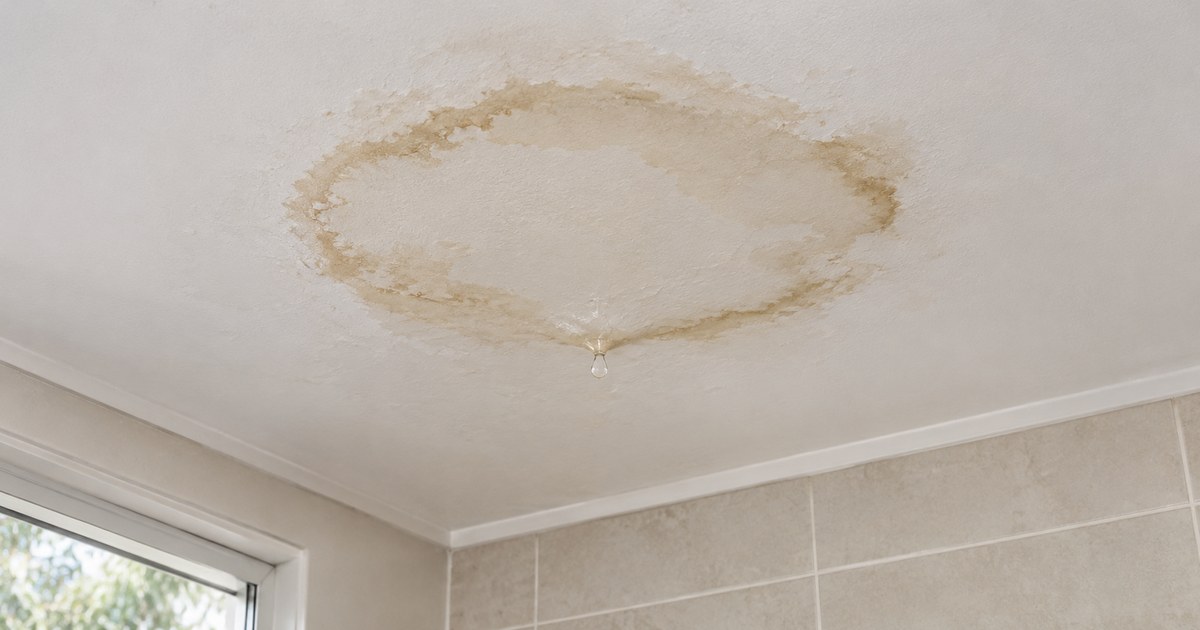
Water leaking through a bathroom ceiling is coming from something above it: the shower or bathroom on the floor above, a pipe in the ceiling space, or the roof. Work out which by noting when it leaks. If it follows showers, the shower above needs repair. If it follows rain, call a roofer. If it never stops, call a plumber.
- Make the room safe first: power off to any wet light fitting, bucket under the drip, keep clear of a sagging ceiling.
- When it leaks tells you where it is from: after showers, after rain, or all the time.
- Fix the source before the ceiling. Paint and plaster over an active leak do not last.
The source is above, not the ceiling
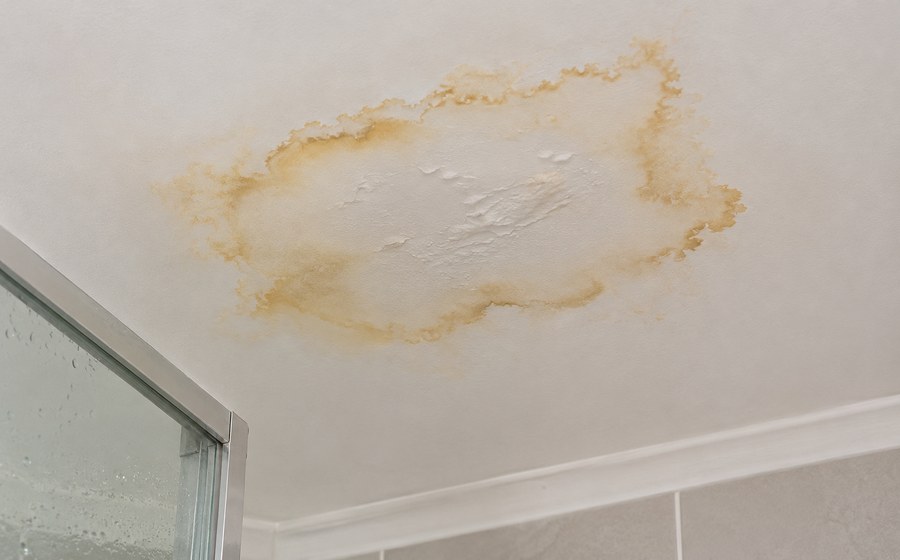
A ceiling does not leak. It shows you that water is arriving from above. A leak in bathroom ceiling plasterboard usually appears first as a yellow-brown ring, then as blistered paint, then as a drip once the board is saturated. Repainting or patching at that point hides the mark for a few weeks and leaves the cause running.
Water also travels. It runs along joists, pipes and the top of the plasterboard before it finds a low point, so the stain can be a metre or more from where the water started.
Common causes
The shower above
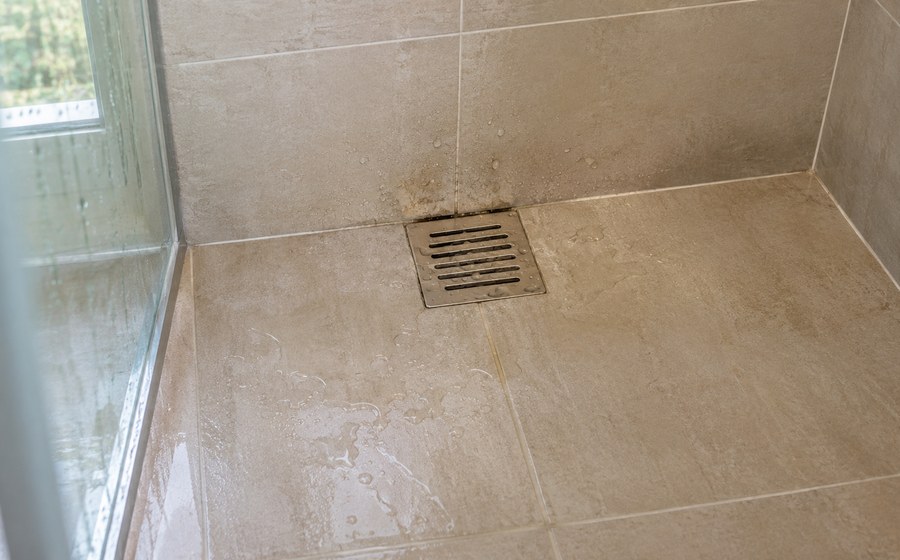
Where there is a bathroom on the floor above, its shower is the first suspect. Water gets out through the seal around the waste, a cracked base, the joint where the floor meets the walls, or a failed membrane, and lands on the ceiling below.
Pipes in the ceiling space
Supply pipes are under pressure all the time and leak all the time. Waste pipes from a bath, basin or toilet above only leak when that fixture is emptied or flushed.
The roof
In a single-storey house or a top-floor bathroom there may be nothing above but the roof. Cracked tiles, failed flashing around a vent or skylight and blocked gutters all let rain into the ceiling space.
Condensation
Steam that cannot escape condenses on a cold ceiling and can drip. It leaves an even speckle of mould and no ring-shaped stain. That is a ventilation problem, covered in mould on the bathroom ceiling.
Shower, pipe or roof: how to tell which is leaking
Keep a note for a few days of when the ceiling is wet and what happened just before. The pattern usually settles it.
| Source | When it leaks | What it looks like | Who to call |
|---|---|---|---|
| Shower on the floor above | During a shower and for an hour or so after | Stain under the shower recess or its waste. Comes and goes. | Leaking shower specialist |
| Water supply pipe | All the time, whether or not water is being used | Stain that keeps growing. May drip steadily. | Licensed plumber |
| Waste pipe from a bath, basin or toilet | When that fixture is emptied or flushed | Stain under that fixture, not under the shower | Licensed plumber |
| Roof | During rain or in the hours after | Top-floor ceilings, often near a wall, vent or skylight | Roofer or roof plumber |
| Condensation | After steamy showers in the room itself | Even speckled mould or beads of water. No ring stain. | Ventilation, not a leak repair |
A guide only. Two sources can be present at once, especially in older buildings.
Two quick tests help. Ask whoever uses the shower above to skip it for two days and see whether the ceiling dries. Then turn off every tap in the home and watch the water meter: if it still moves, a pressurised pipe is leaking.
Who to call: plumber, roofer or waterproofer?
Call the trade that matches the source, not the trade that fixes ceilings.
- A leaking shower specialist or waterproofer when the leak follows use of a shower above. The water is escaping the tiled area, and that is a waterproofing repair.
- A licensed plumber when it leaks constantly, or when it follows a bath, basin or toilet being used.
- A roofer or roof plumber when it follows rain.
- An electrician first, in every case, if water has reached a light, exhaust fan or switch.
- A plasterer and painter last, after the source is fixed and the ceiling has dried.
If you cannot tell which it is, start with leak detection, so the right trade is called once. In NSW, anyone you pay to do waterproofing worth more than $5,000 in labour and materials must hold a contractor licence, and plumbing has to be done by a licensed plumber.
In a strata building, tell the strata manager as well as the owner of the unit above. The NSW Government’s guidance is that the owners corporation usually looks after ceilings and water damage that comes from common property, while water damage that starts inside a lot is usually that owner’s to deal with. The strata plan and by-laws decide it for your building.
Making the room safe before the repair
- Deal with electricity first. If water is near a light, exhaust fan or power point, switch that circuit off at the switchboard. Do not touch a wet fitting.
- Stop adding water. Ask for the shower above not to be used until it has been inspected.
- Catch the drip. Put a bucket under it and move towels, rugs and anything electrical out of the way.
- Keep clear of a bulge. A ceiling that sags or bulges is holding water and can come down. Keep people out from under it.
- Take photos. Dated photos of the stain help your insurer, landlord or strata manager.
- Let air in. Open the window and run the fan, if it is dry and safe to use, so the room dries between leaks.
Why the stain keeps growing
Plasterboard soaks water up and spreads it, so each leak wets a slightly wider area than the last. The stain grows outward in rings. Wet board loses strength and starts to sag between the ceiling joists. Mould follows within days on a surface that stays damp. Above the board, insulation holds the water against the timber. None of that reverses on its own, and a ceiling that has sagged has to be replaced, not repainted.
What to do
Work in this order. Make the room safe. Identify the source from the pattern. Call the matching trade. Fix the ceiling last. If the pattern points to the shower above, book a shower repair inspection: we test the floor, the base, the waste and the junctions of that shower, tell you which has failed, and give you a fixed-price quote in writing. Most of these repairs are made from the surface, with the tiles left in place, and carry our 100% workmanship guarantee in writing.
Stopping it from coming back
- Wait until the ceiling is fully dry before repairing it, and use a stain-blocking primer under the new paint.
- Keep the silicone and grout in the shower above in good order. They are the first things to fail.
- Check the ceiling again after the next few showers and the next heavy rain.
- Clear gutters and have roof flashings looked at if the leak followed rain.
- Keep the report or certificate from the repair. Strata managers and insurers ask for it.
Frequently asked questions
Who do I call for a water leak in the ceiling?
An electrician first if water is near a light or fan. Then match the trade to the source: a leaking shower specialist if it follows showers above, a licensed plumber if it leaks constantly, a roofer if it follows rain.
Why does my ceiling leak only when it rains?
Because the water is coming from the roof, not the plumbing. Cracked tiles, failed flashing around vents and skylights and overflowing gutters are the usual causes. That is a job for a roofer or roof plumber.
Is a water stain on the ceiling always a leak?
Not always. Condensation from a steamy bathroom can mark a ceiling too, but it leaves an even speckle of mould. A ring-shaped yellow or brown stain means water has come through from above.
Can I paint over a water stain on the ceiling?
Only after the source has been fixed and the ceiling has dried out. Use a stain-blocking primer first, or the mark will show through the new paint. Painting over an active leak just hides it for a few weeks.
Is a leaking ceiling dangerous?
It can be. Water near light fittings or wiring is an electrical hazard, and saturated plasterboard can sag and fall. Switch off the affected circuit and keep out from under any bulge.
How do you find the source of a ceiling leak?
By timing and by testing. Note whether it follows showers, rain or neither, and check the water meter with all taps off. A specialist then tests each part of the shower above and takes moisture readings to confirm the path.
Got a leaking shower?
Book an inspection and a fixed-price quote. We come to you, anywhere in Sydney.
Get my quote